
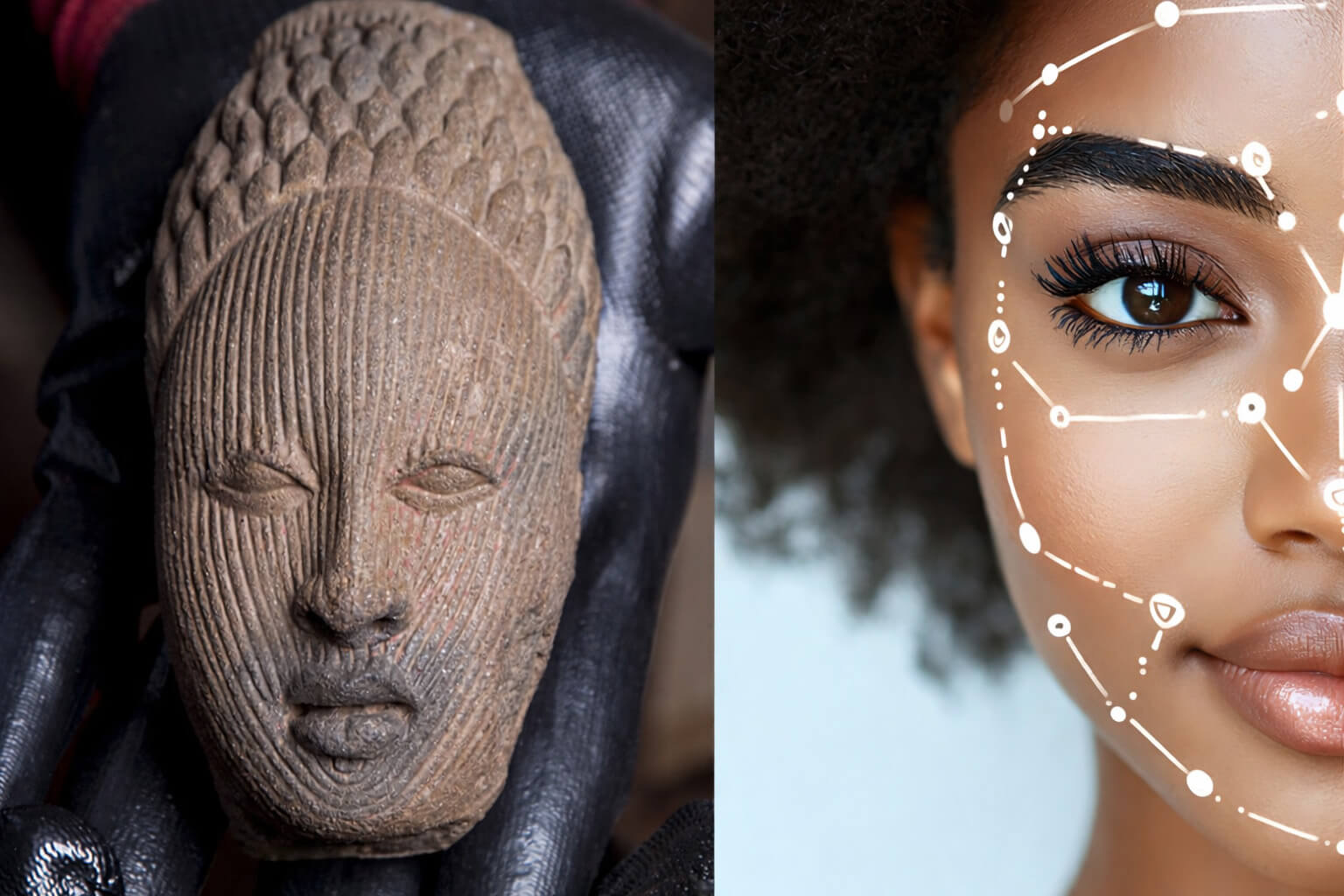
What does it mean to capture individual likeness, regardless of using sacred earth or lines of code?
Oriiz explores how capturing likeness has always been political, from the ritual workshops of ancient Ifẹ to today’s AI systems that form our identities.
Introduction
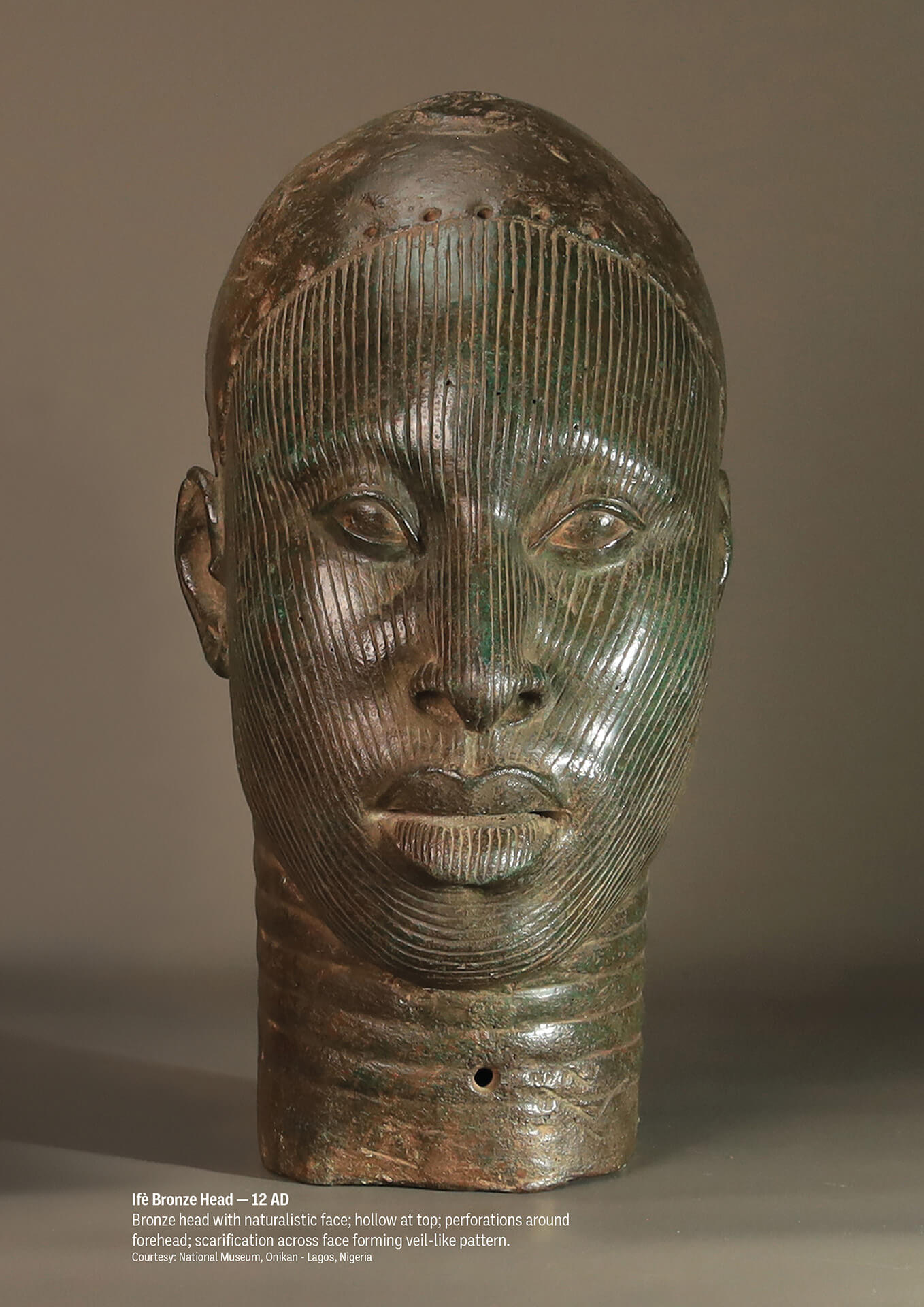
Form is never neutral. A thousand years ago in Ifẹ, Nigeria, artists sculpted faces in bronze and terracotta with such skill that early European visitors doubted Africans could have made them. These works were more than mere effigies; they asserted presence. They showed that identity could be captured with dignity, accuracy, and real humanity. The artists depicted not only facial features but also the individual’s soul.
Picture a terracotta head, smaller than your fist. The sculptor made it so lifelike that it feels like an instant captured in time, not just an image. The fine lines of the hair, the fullness of the lips, and the calm authority in the eyes are rendered with such care that the terracotta seems nearly lifelike. These sculptures feel magical because they carry a person’s presence through the ages.

From Sacred Clay to Digital Faces
Today, artificial intelligence shares a similar goal: to read, classify, and copy the human face. But making a likeness, whether from sacred clay or complex code, is never simple. It always carries cultural, political, and ethical consequences. From ancient Ifẹ shrines to Silicon Valley datasets, creating a likeness remains a struggle over meaning, visibility, and power.
Portraiture and Presence
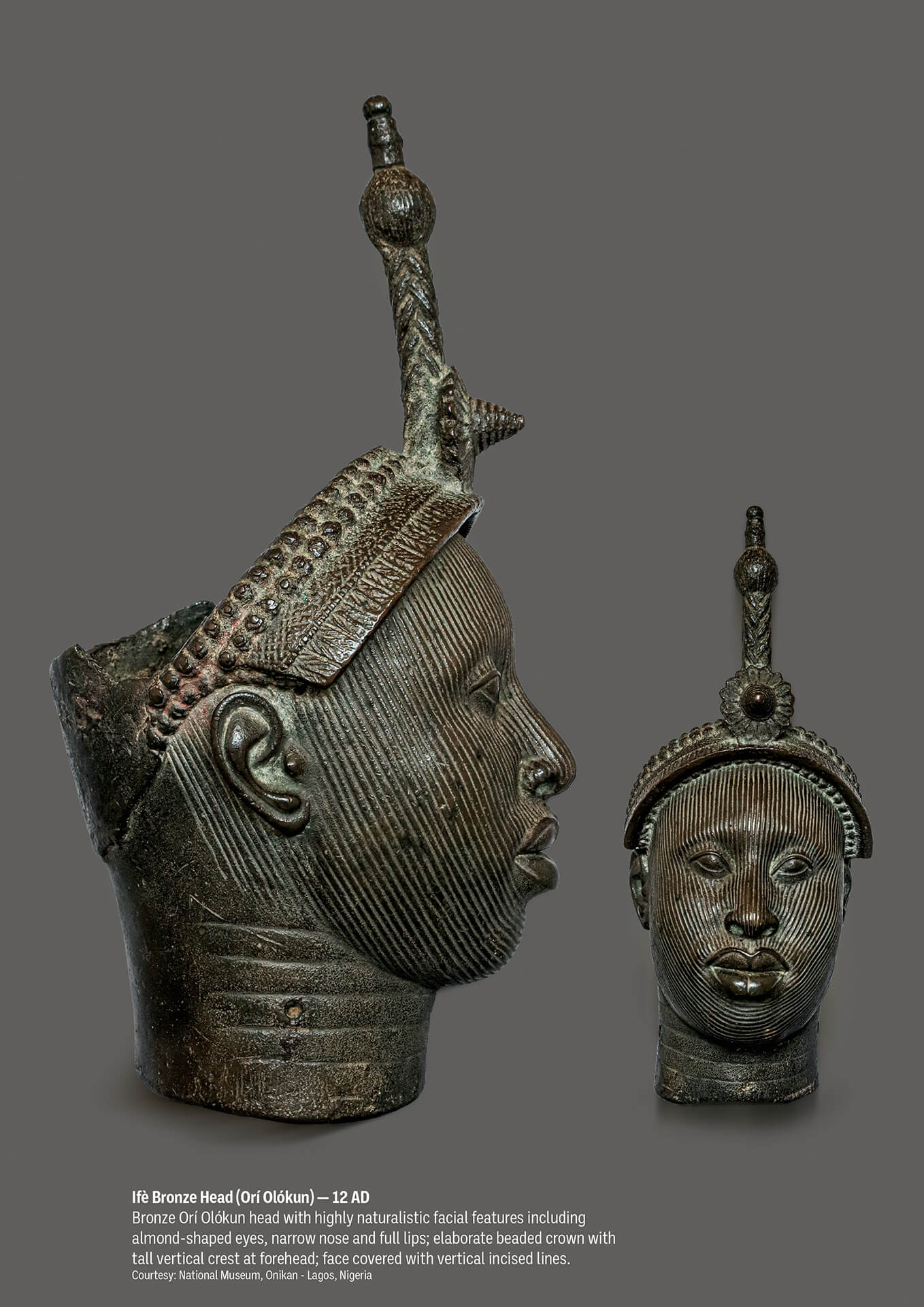
The naturalism in Ifẹ portraiture was intentional. Created between the twelfth and fifteenth centuries, these pieces show a deep attention to life: detailed hairstyles, intricate crowns, and gentle cheekbones. This realism went beyond mere beauty. In a society where sacred kingship connected the human and the divine, a portrait embodied spiritual presence. It made rulers or ancestors present, linking the living to their roots and legitimacy.
Showing someone in such detail meant they were truly seen, acknowledged, remembered, and given authority in the kingdom’s worldview. The portrait did not just reflect identity; it helped create and confirm it.
A thousand years later, artificial intelligence attempts to read human faces using algorithms and machine learning. These systems classify expressions, verify identities, and generate synthetic faces. They also claim to capture “likeness.” But today, the stakes are much higher. The Ifẹ artists worked with ritual care, whereas AI is often used for surveillance, business, and social control. A mistake in ancient Ifẹ could have changed a story, but a mistake in an AI system today can threaten someone’s freedom, opportunity, or safety.
The Politics of Being Seen
Politics always shapes how we see others. In Ifẹ, bronze portraits affirmed belonging, ancestry, and authority, ensuring each person had a recognised place in the community. The ‘eyes’ of artificial intelligence, however, are trained on datasets that often miss or misrepresent African faces, leading to a new kind of erasure. Research shows that facial recognition technology is far more likely to misidentify people of African descent than those of European heritage. This misidentification is not just a technical flaw; it is a digital reverberation of centuries of exclusion. When the code does not recognise you, the systems it supports fail to acknowledge your full humanity.
Towards Ethical Representation
Still, both worlds share a common goal. Ifẹ artists sought to honour their subjects through honest, respectful representation. Today, many technologists are working to build fairer, more inclusive systems. The deeper lesson from Ifẹ is that real likeness is not merely about technical accuracy. It is a relational, contextual, and moral task. It raises questions about how a face is understood, placed, and valued. The ethical challenge is whether AI can learn to respect cultural sovereignty and community agency, and to approach its work with the same care that Ifẹ sculptors gave their subjects.

Materials and Memory
These materials tell their own story. Ifẹ artists used earth, metal, and fire, shaping each portrait with skilled hands to forge enduring vessels of memory. They treated their materials as sacred.
In contrast, engineers build AI from code, silicon, and electricity. These invisible materials are as powerful as physical ones. When they assemble a dataset, it is never a neutral snapshot of the world. Instead, the dataset reflects power, highlighting some stories while obscuring others.
An algorithm always reflects the biases and blind spots of those who created it. The foundation of AI is not bronze but often hidden bias. Without careful questioning, it can produce likenesses that reinforce unfairness.
Reclaiming History with Technology
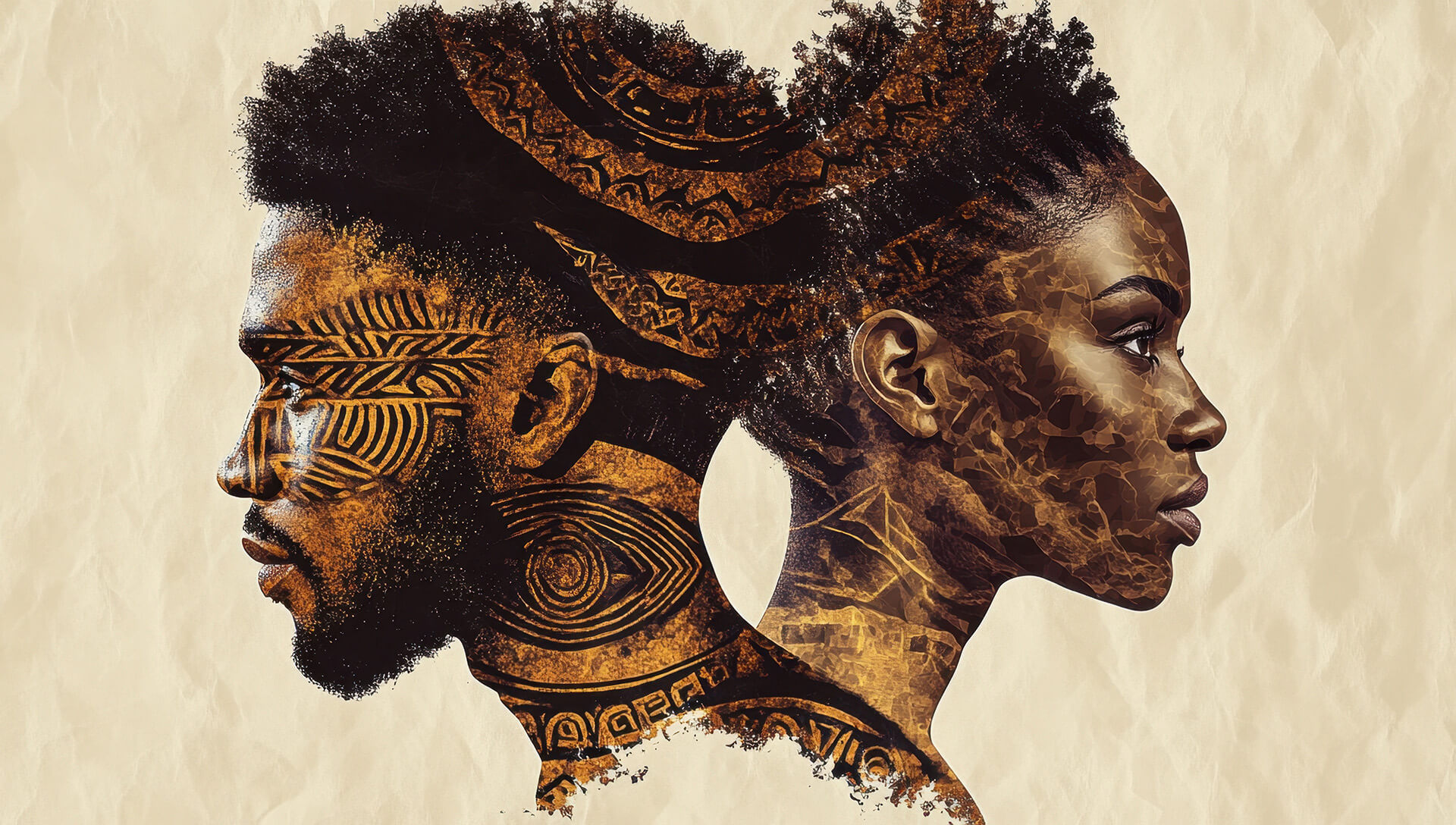
But this new medium also has the power to transform. Just as Ifẹ portraits preserved identity over time, AI can help reclaim history. Today, artists across Africa and its diaspora use AI to reinterpret traditional forms, imagine portraits of ancestors, and challenge colonial archives. In their hands, AI becomes a technological instrument for shaping new futures from African memory.
For example, Afrofuturist artists use generative models to create portraits that blend Ifẹ’s naturalism with bold, imaginative styles: skin that gleams like liquid metal, headdresses adorned with geometric patterns, and faces that seem to contain entire worlds. These works reject the notion that African innovation belongs only to the past. They carry Ifẹ’s realism forward, showing that technological creativity is a living, evolving tradition.
Possibilities and Perils
Yet this potential also carries risks. Algorithmic likeness is already used for surveillance, border enforcement, and the spread of political disinformation through deepfakes. Artificial faces can outshine real ones, and errors can reinforce damaging stereotypes. Like any powerful technology, AI must be guided by strong ethical standards. Ifẹ artists were guided by a culture that honoured dignity above all else. For AI, the key question is not whether it can copy the form, but whether the same strong ethical obligation can guide it.
The Continuing Question of Likeness
When an ancient terracotta head meets a modern algorithm, we see a lasting truth. Likeness is much more than an image; it is a place where people contest and define power and identity.
Ifẹ sculptors used ritual, lineage, and skill to represent others. Today, AI engineers use code, data, and logic to determine how people appear in the digital world. Both groups play a fundamental role in shaping how society represents individuals and in deciding who gains recognition and belonging.
Who Owns Likeness?
Ownership of likeness raises an important question: Who has the right to likeness? In Ifẹ, that authority rested with the community, shaped by shared cultural meaning. Today, that power often resides with corporations and governments. The struggle for fair and just likeness is ultimately a struggle for self-determination, recognition, and the essential right to be seen and to exist.
The unBROKEN Thread connects the calm, striking faces of Ifẹ with the digital faces created using neural networks. It reminds us that the desire to preserve and understand identity through technology is genuinely human. It urges us to approach every likeness, whether made in clay or coded in silicon, with intention, integrity, and the aim that representation always brings dignity, not erasure.
Oriiz is a Griot, Curator, Designer, Culture Architect, and Strategist who makes African history accessible to everyone: those who know, those who question, and those who never thought to ask. He connects 8,000 years of knowledge to today.
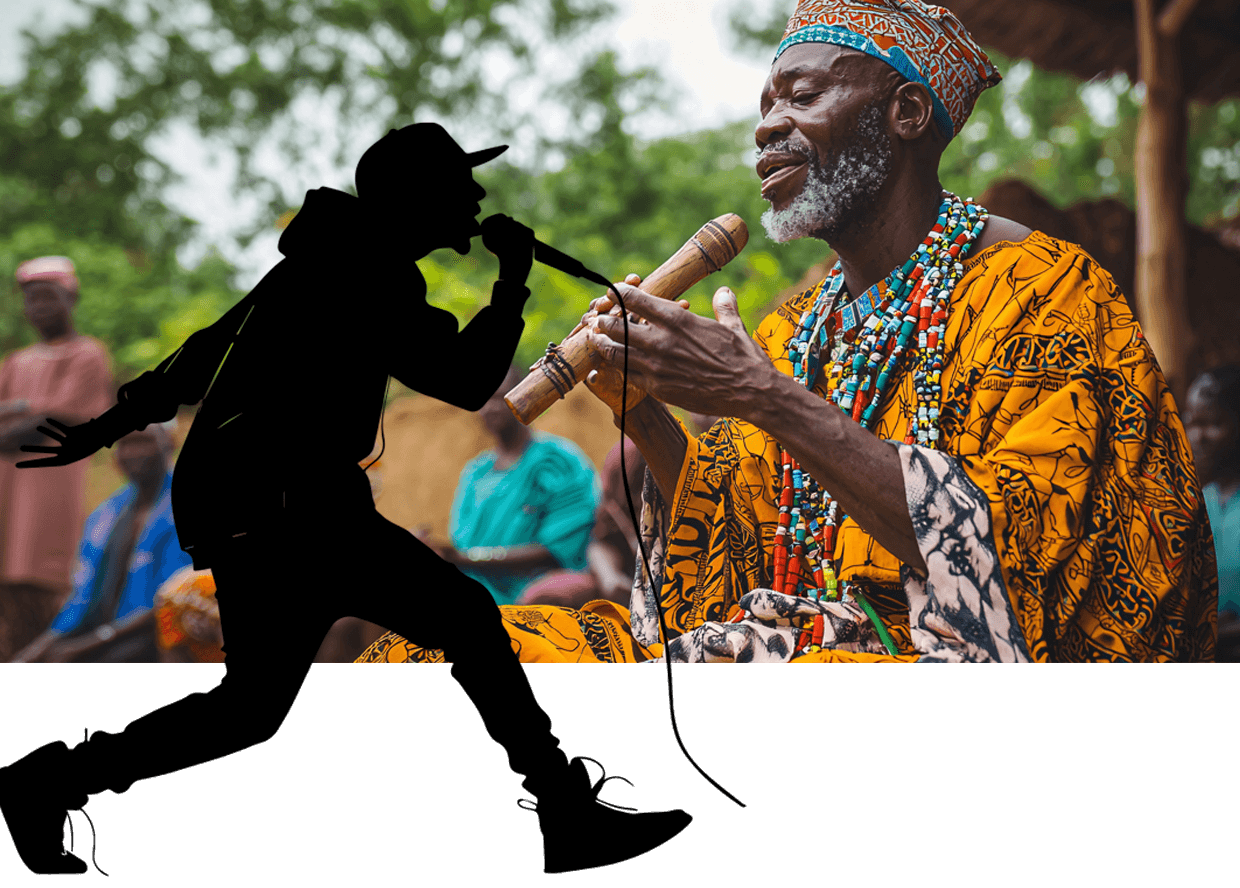
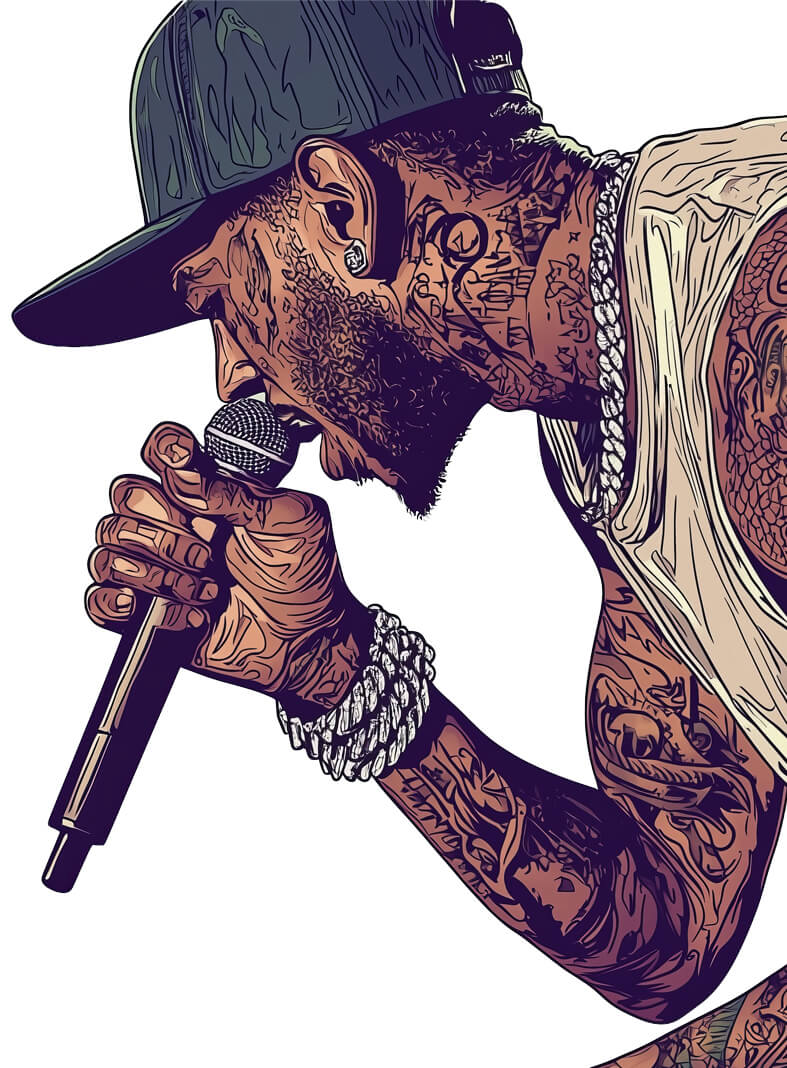 Yet the principle endures: technology is never neutral. It amplifies voices but also shapes meaning. Just as the griot’s instrument framed the narrative, the rapper’s beat frames the verse. Both remind us that form carries philosophy.