
By Oriiz U Onuwaje
Oriiz examines the symbolism and aesthetics of pottery in Nigeria, exploring how artisans transform earth into objects rich with meaning. This essay delves into traditional techniques, cultural motifs, and artistic expressions that define Nigerian pottery, revealing how these crafted vessels embody the values, beliefs, and creativity of their makers. In Nigeria, clay is not just shaped by hand, but also by heritage and imagination.

Introduction
Pottery in Nigeria has a subtle yet lasting presence. Unlike bronze or monumental sculptures, which stay distant, pottery is tightly woven into everyday life. It appears in people’s hands, by the hearth, in courtyards, and at shrines. Such presence speaks softly but persistently through every household.
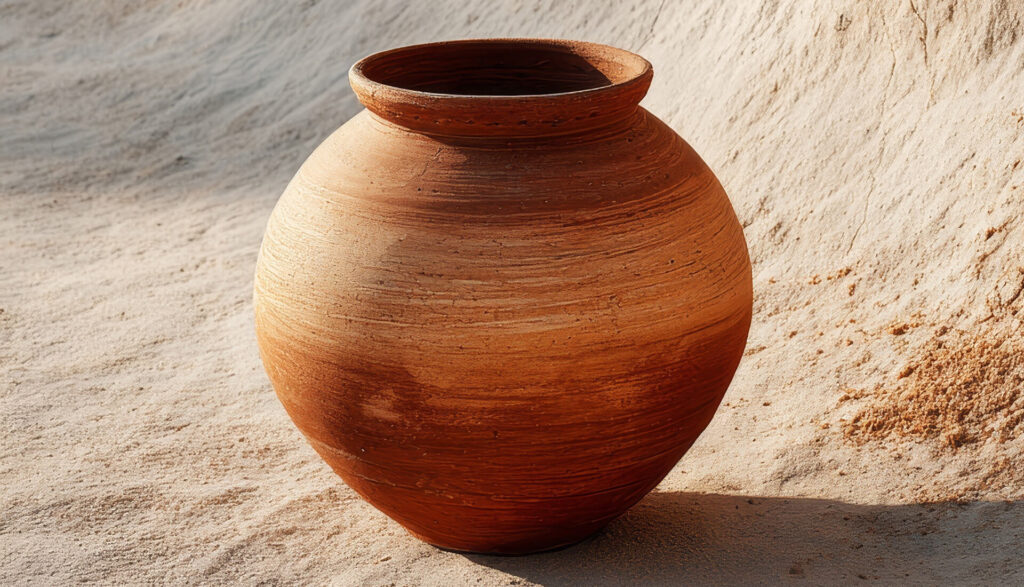
A clay vessel may seem simple. Look deeper. Fine details like shape, weight, and texture reveal purpose. Pottery is not only useful; it is beautiful, meaningful, and cultural. Fired clay combines labour, memory, and significance.
In many Nigerian cultures, pottery combines art with daily life. Clay becomes pots used for cooking, storage, cooling, and rituals. Each piece is crafted with care. Beauty is inherent in the design. Use and shaping coalesce, strengthening pottery’s connection to function and significance throughout history.
Pottery and Nok and Ife Terracottas
Pottery represents a tradition of deliberate earth-shaping. Nok terracottas from Nok and Taruga, in today’s Kaduna State, exemplify this. Skilled and meticulous hands shaped the clay. The evidence remains. Bernard Fagg uncovered this history.
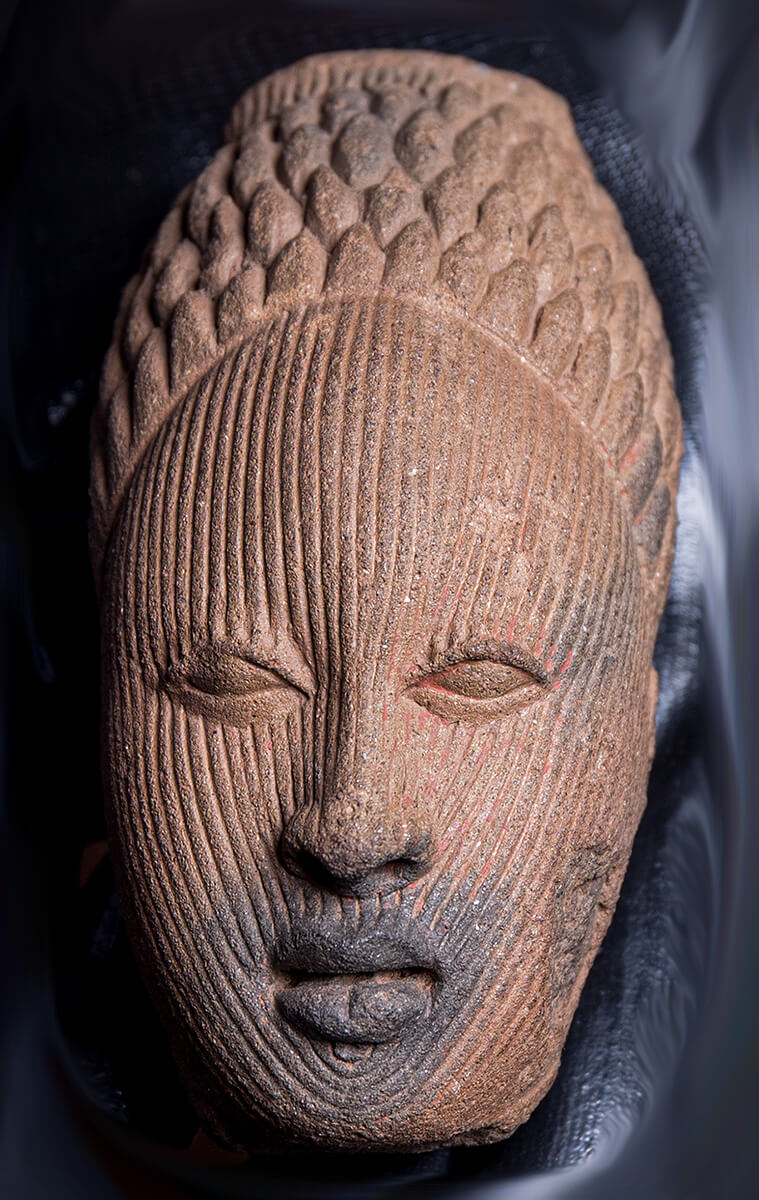
IfeTerracotta Miniature Queen Head – 12 AD
Though Nok’s works are mainly sculptures, they belong to this tradition. They demonstrate clay’s importance and its ability to convey structure and meaning.
The terracottas of Ile-Ife in present-day Osun State also demonstrate this sophistication. These intricate, naturalistic works appear in sacred and royal settings. They affirm that earth can be transformed into profoundly meaningful objects.
There is no straightforward path from Nok to Ife or subsequent pottery styles. Nonetheless, they all form part of a wider tradition where clay is shaped intentionally. Looking at them together helps clarify the nature of pottery.
Unlike terracotta sculptures, pots serve everyday people. They are used daily to store water, cook, keep grain, and hold ritual items. This connection to daily routines gives pots special significance. Each one is always present, always nearby.
Form and Aesthetic Structure in Pottery
Pottery’s beauty starts with its proportions. Before decorating, we notice the opening, neck, body, and base, all of which are carefully crafted. A well-made pot feels balanced and sturdy.
Here, harmony comes from structure, not decoration. This gives the pots a quiet strength that lasts. In places like Kwali, Suleja, and Oyo, this carefully planned approach is clear. Pots may be big, but never too much. Their strength comes from proportion, not showiness.
Surface Treatment and Decorative Language
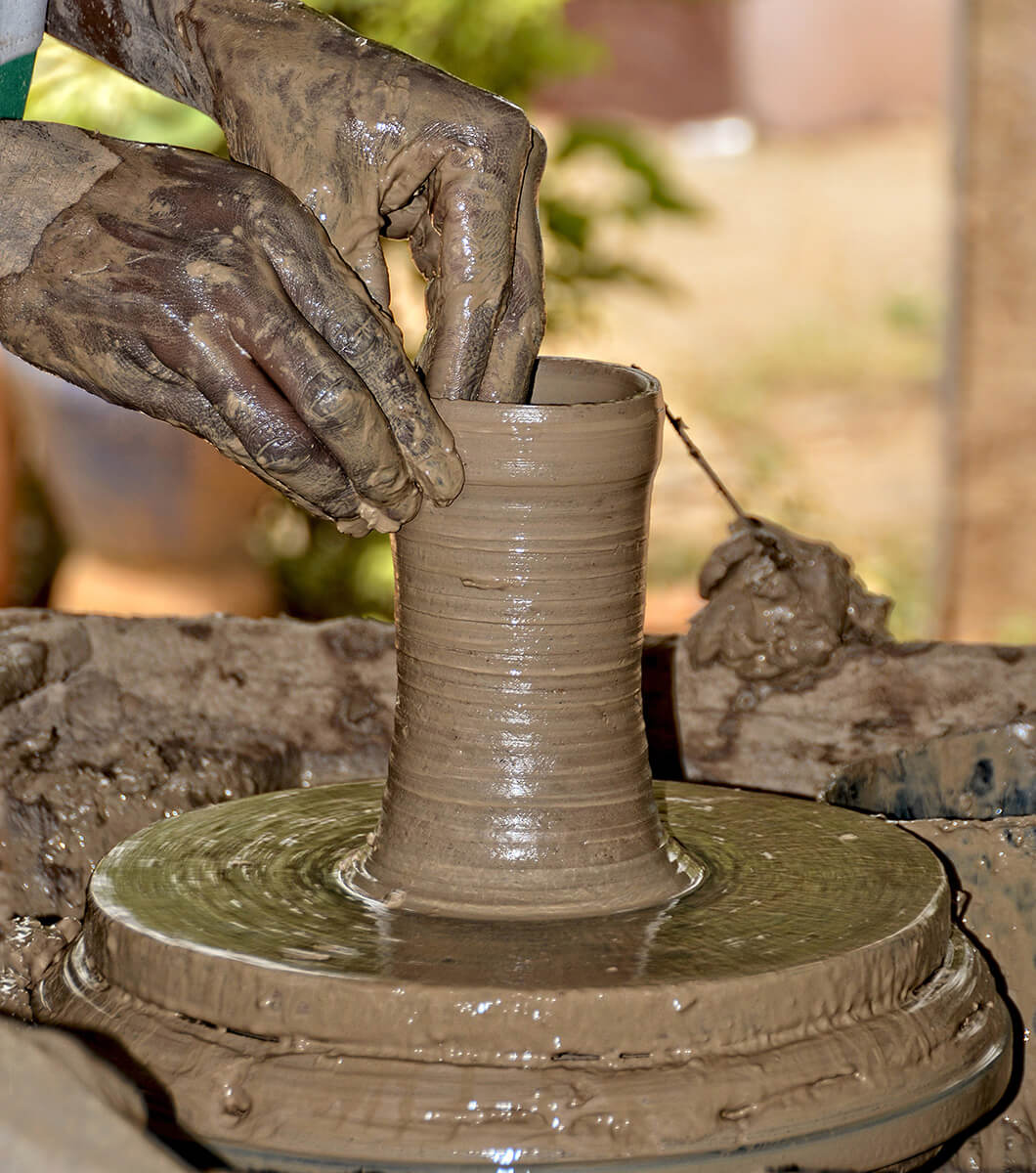
The way the surface is finished adds even more significance. Nigerian potters use techniques such as burnishing, carving, ridging, and patterns. Each technique influences how people perceive the pot. The details go beyond decoration; they draw attention and invite interpretation.
A shiny surface indicates refinement, while a smooth, glossy surface demonstrates skill. Lines carved into the pot can emphasise its shape; repeated patterns create rhythm and movement. Decoration always complements the pot’s form, maintaining balance and unity. Specific motifs on pots signal identity, heritage, or lineage. For example, spiral or wavy lines often represent water sources or fertility. They act as visual markers, identifying a community or reflecting the potter’s family background. In certain contexts, a vessel’s rounded body suggests fertility, containment, and sustenance. Therefore, the form connects to its meaning.
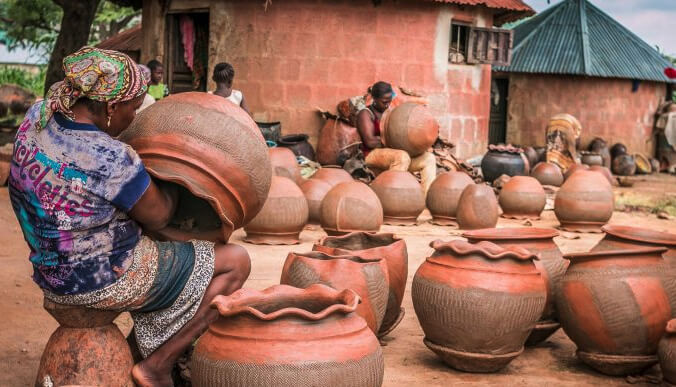
Ushafa Cultural Pottery Centre
Meaning differs across communities. What makes sense in one may not in another. Pottery resonates most strongly with those who share its traditions.
Pottery in Yoruba Culture: Oyo Context
In Yoruba culture, particularly in Oyo, pottery plays a role both at home and in rituals. Pots are used for cooking and storage, and they are also found in shrines dedicated to orisa.
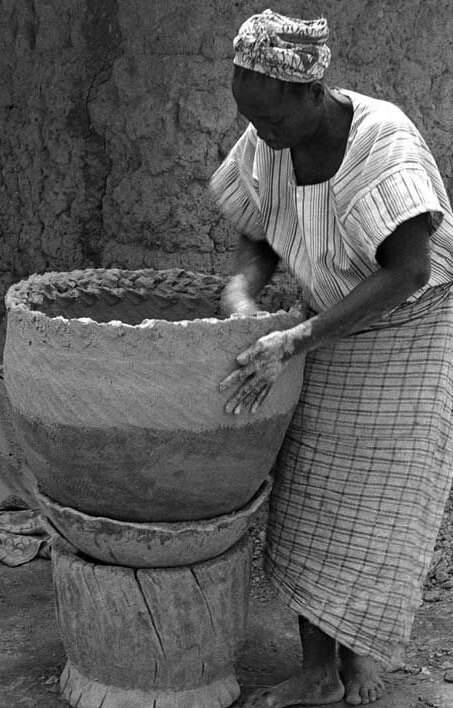
Oyo State Pottery
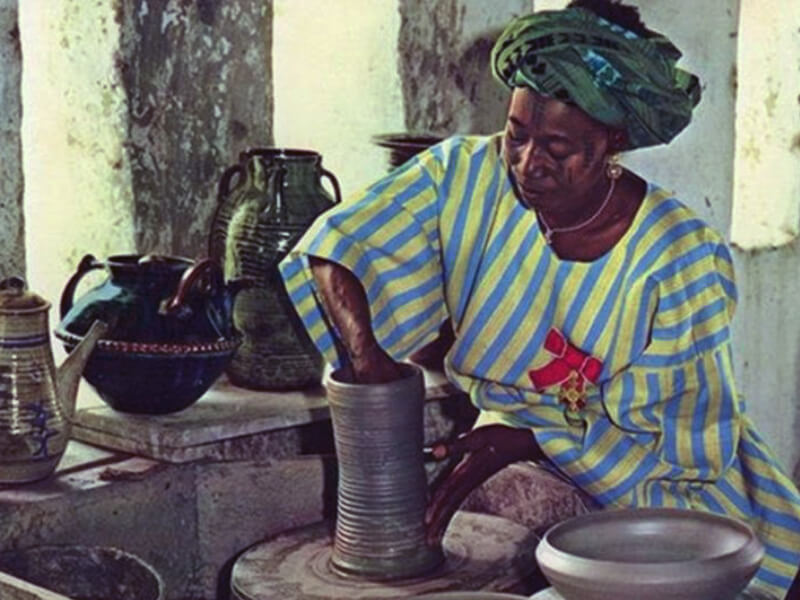
Ladi Dosei Kwali
In rituals, pots gain greater significance within a spiritual system. The design stays deliberate and straightforward, with restrained shapes and surfaces. Beauty is disciplined, not ostentatious.
Women and the Transmission of Pottery Knowledge
Women have played a vital role in Nigeria’s pottery. In many communities, they preserve the knowledge of sourcing clay, preparing it, and creating and firing pots. Their efforts shape the tradition. They are its guardians.
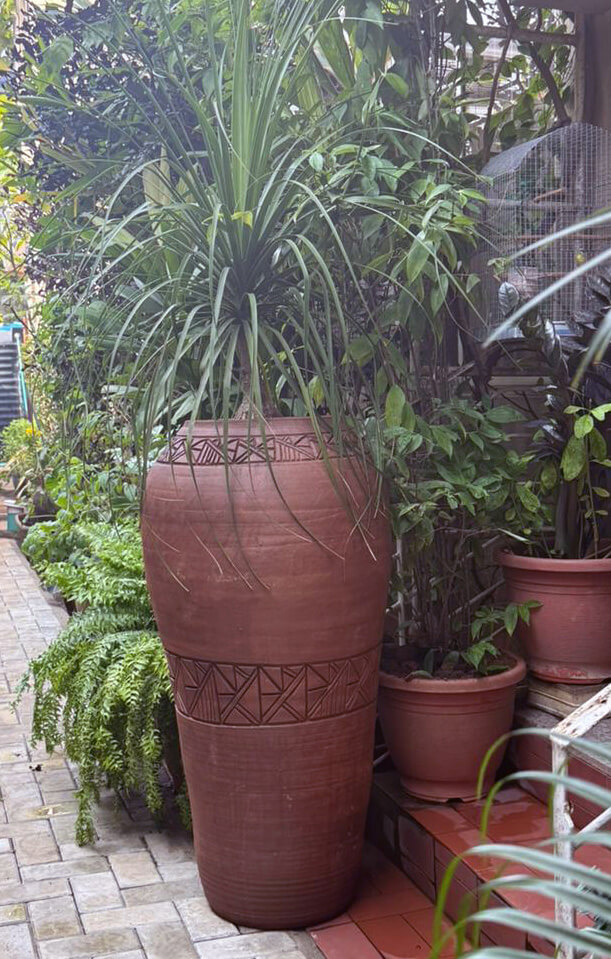
Flower pot by Akinpotter
This knowledge is gained through doing, not reading. It is passed on by watching, practising, and learning from mistakes. It demands skill and a keen eye for beauty. Although often overlooked, the tradition continues vibrantly.
Ladi Kwali and the Expansion of Visibility
Ladi Kwali stands out in this tradition. Born in Kwali, near Abuja, she became Nigeria’s most
renowned potter. Her pots are sturdy, well-shaped, and often feature carved patterns.
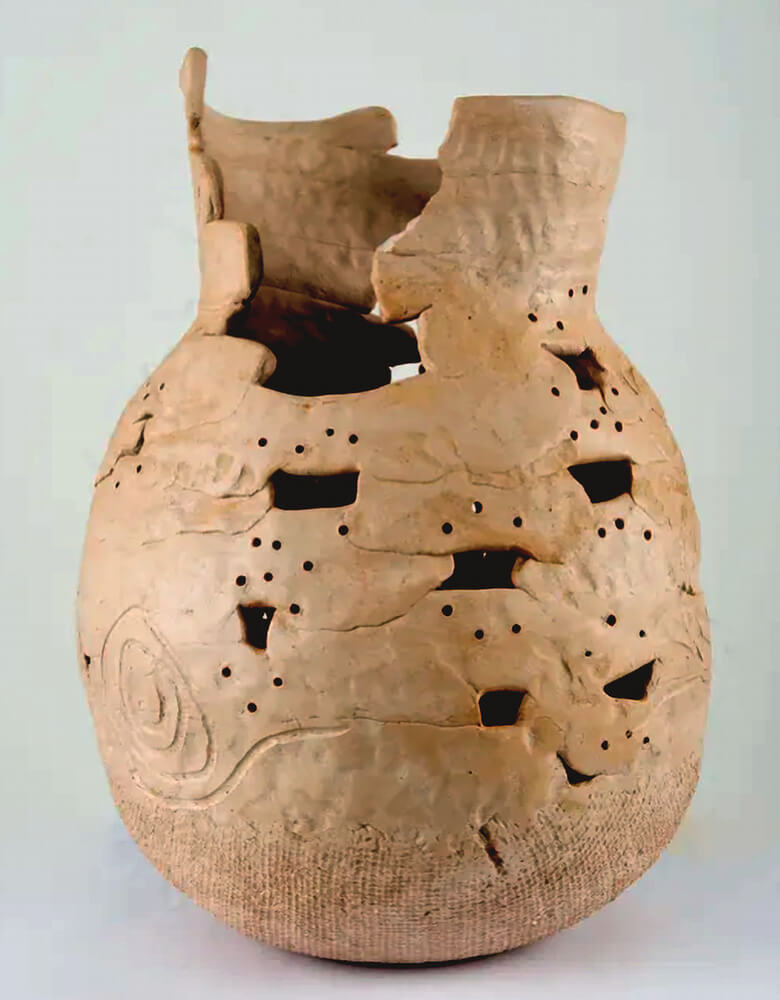
Chris Echeta, 2019. Terracotta, engobe and aluminum
By collaborating with Michael Cardew at the Abuja Pottery Training Centre in Suleja, Ladi Kwali expanded her reach to wider audiences. More importantly, she preserved and advanced the tradition. She reached new audiences. She honoured her roots. The Abuja Pottery Training Centre became a key gathering place. Local traditions blended with modern studio techniques, and traditional pottery-making practices were influenced by wider ideas about ceramics. Old met new. The exchange transformed both.
This did not replace old methods, but complemented them. Abuja combined traditional knowledge with modern techniques, linking local pottery to wider art forms.
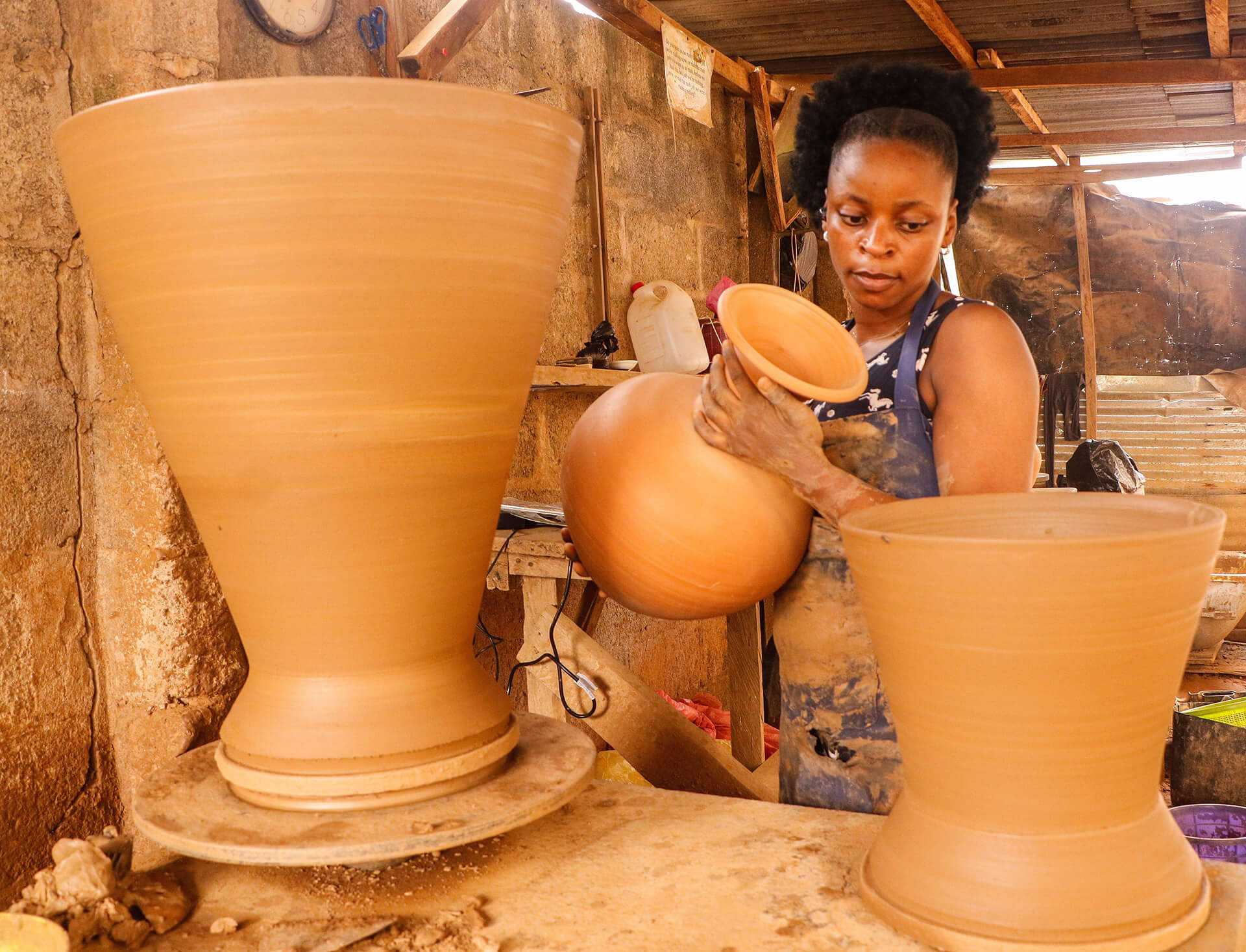
Craftswoman Olugbade Adekemi makes clay pots using traditional methods at her local pottery workshop in a suburb of Lagos.
Contemporary Ceramics in Nigeria
Ceramics in Nigeria continue to develop. This momentum persists across various centres of artistic production. Universities and art schools in Nsukka, Zaria, Ile-Ife, and Lagos have maintained ceramics as a vital area of study. Potters such as Benjo Igwilo, Chris Echeta, and Akinpotter of Ibadan demonstrate that clay remains a lively medium. Some closely follow traditional vessel forms; others explore sculptural or experimental paths. What unites these practices is an awareness that clay is not limited. It remains open to new interpretations.
Regional Diversity in Pottery Traditions
There is no single Nigerian pottery tradition. Practices differ across regions such as Afikpo, Oyo, Kwali, the Benue Valley, and the Lower Niger. Conditions influence not only the materials but also the forms and uses. Each region leaves its own mark.
This variety embodies richness, not fragmentation. It demonstrates pottery’s flexibility in adapting to cultural and natural contexts.
Function and Artistic Integration
In pottery, both function and beauty are intertwined. Cooking pots, water vessels, and ritual containers are crafted specifically for their intended uses.
Beauty arises from harmony between use and form. It does not appear afterwards but develops from the pot’s purpose.
Material Transformation and Philosophical Meaning
Clay is a powerful symbol. Extracted from the earth, shaped by water, pressure, air, and fire, it begins as formless and flexible, then becomes strong and enduring. The process is simple but profound. Clay’s transformation reveals a larger idea: nature isn’t merely exploited but reshaped. Pottery illustrates this process clearly.
Clay’s transformation reveals a larger idea: nature isn’t merely exploited but reshaped. Pottery illustrates this process clearly.
Contemporary Challenges and Continuity
Today, pottery faces new challenges. Modern materials are everywhere. Lifestyles are changing. People are using traditional pots less. Consequently, passing down pottery skills is no longer guaranteed. The future depends on adaptability. The tradition stands at a crossroads.
Yet pottery persists. It endures by evolving while maintaining its core principles.
Conclusion
Pottery in Nigeria still holds great significance. From Nok and Ile-Ife terracottas to the pots of Oyo and Kwali, and today’s art, clay remains vital. Pottery is more than just a container. It records ideas, labour, and change. In decorated clay, we find not only objects but a lasting testament to the human desire to express, create, and preserve meaning.

Oriiz is a Griot, Curator, Designer, Culture Architect, and Strategist who makes African history portable and accessible to everyone: those who know, those who question, and those who never thought to ask. He connects 8,000 years of knowledge with the present. Oriiz also edited and served as Executive Producer for The Benin Monarchy: An Anthology of Benin History (The Benin Red Book), Wells Crimson, 2019. Author: The Harbinger: A Window into the Soul of A People: 8000 years of Art in Nigeria, Crimson Fusion (2025).
:::::::: oriiz@orature.africa IG: @oriizonuwaje
