
By Oriiz U Onuwaje
Oriiz explains how pre-colonial Nigerian societies established a monetary system using cowrie shells, manillas, iron bars, and cloth. This monetary system was a comprehensive economic framework based on trust and innovation, supporting trade and integrating markets into social and political life long before colonisation.
Foundation of Daily Trade: Cowrie Shells
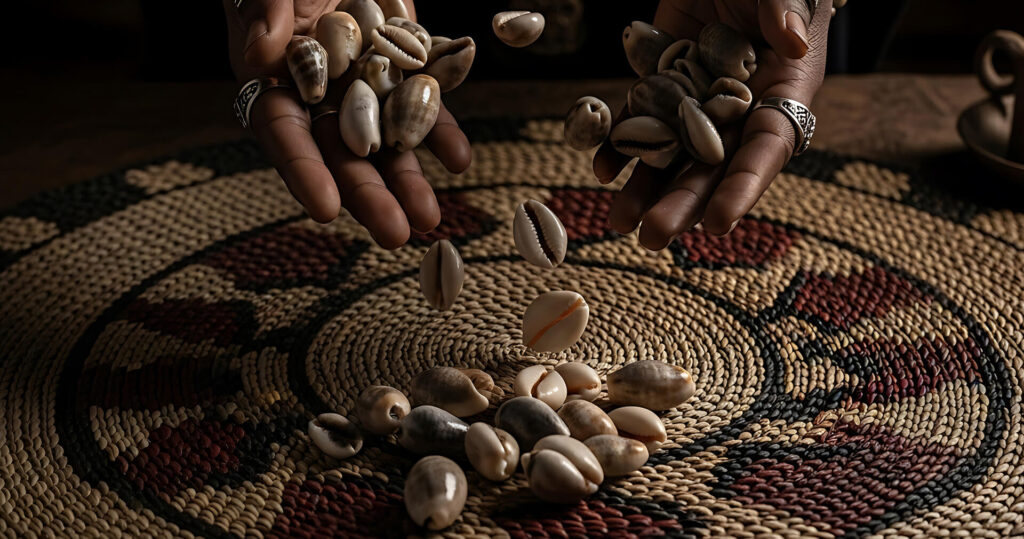
Cowrie shells (primarily Cypraea Moneta) served as the basis for daily exchanges and minor debts in pre-colonial Nigeria. Cowries were durable, divisible, and portable. These qualities made cowries ideal for small transactions and minor debts. They arrived in Nigeria in the 15th century via trans-Saharan and European trade. Their value was socially established and widely accepted among groups such as the Yoruba, Hausa, and Edo.

Numeracy skills were essential for handling cowries. The Yoruba and Hausa developed sophisticated counting systems, demonstrating their mathematical abilities. Additionally, the quality of the cowries was important. Cowries were graded based on size, shine, and completeness. Larger, shinier, and fully intact cowries commanded higher prices. This grading system acted as an early form of quality control and a way to preserve value.
Cowries were incorporated into the economic activities of regions such as the Kingdom of Benin and the Oyo Empire. Cowries were used to pay taxes and fines, and to make offerings to the gods. By integrating cowries into the administrative and spiritual fabric of society, the economic systems of these regions developed a common economic language that facilitated trade across culturally distinct areas. As a result of the widespread adoption of cowries, the regional economies of the area became interconnected economically.
For Major Transactions: Manillas and Iron Bars
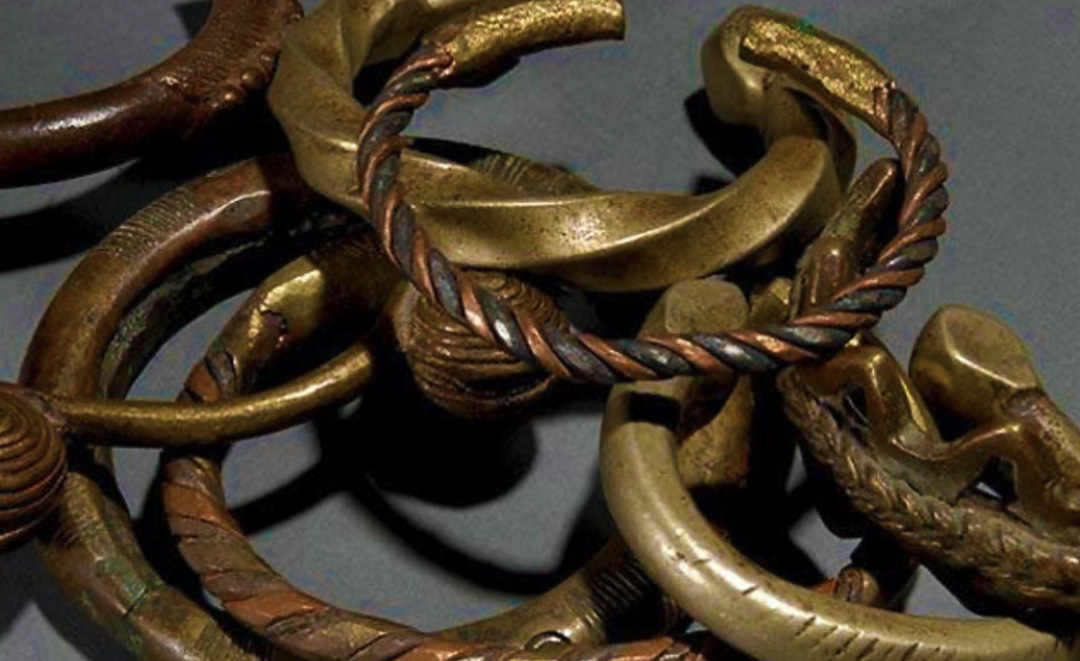
Because large transactions such as buying land or paying dowry required vast quantities of cowries, the cowrie-shell system became impractical for these purposes. A newer form of currency, more valuable and easier to carry, was necessary. Two types of currency fulfilled these criteria: manillas and iron bars. Both are examples of purpose-made currencies whose worth was guaranteed through standardised manufacturing and cultural acceptance.
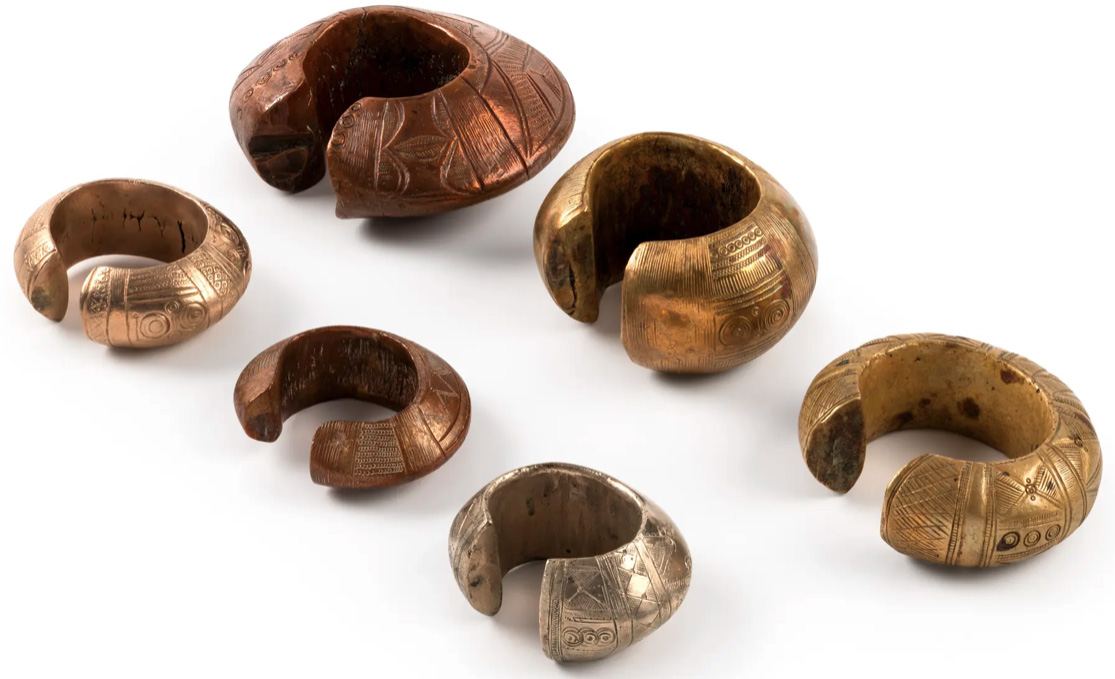
Manillas, the more popular form of currency on the West African coast from the 16th century onwards, are usually horseshoe-shaped and primarily made of brass or copper. Manillas were initially produced in Europe for trade with Africa. As manillas were exchanged along the West African coast, their design and weight were gradually standardised to suit local users’ preferences and existing value systems.
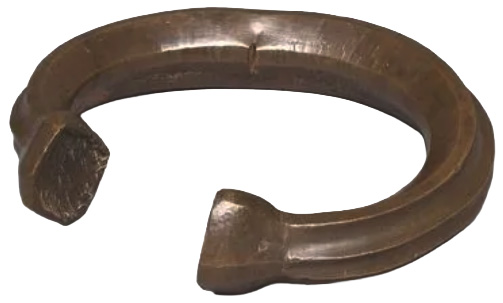
Manillas were the preferred medium for major transactions in the Niger Delta and among the Igbo and Ibibio peoples. The value of manillas is based on the metal content and the labour required to produce them. Consequently, there is a direct link between the value of the Manilla and the craftsmanship involved in making it. Manillas have been used as displays of wealth, worn during ceremonial occasions, and created for social payments such as bride price, signifying that manillas played a role in the exchange of goods and services beyond merely serving as a medium of exchange.
Manillas were so deeply embedded in the economic system of West Africa that, even when the British colonial government introduced its own currency to the region, manillas continued to be used as currency. To put an end to the use of manillas as currency, the British government banned and demonetised them in the early 20th century. This measure led to severe economic hardship for the people of West Africa.
Iron bars, similar to manillas, were also used as a high-value medium of exchange in other parts of West Africa. Iron bars, often shaped like a hoe or a point, were produced in standardised sizes and weights. The production of iron bars was regarded as a prestigious craft, and the finished product carried spiritual significance. Standard iron bars were valued as a measure of wealth, used as payment for various purposes, including compensation for a large plot of land, serious offences, and were regarded as part of a noble’s treasure. Unlike manillas, which were mainly used in coastal transactions, iron bars circulated widely across inland trading networks, connecting regions through a shared understanding of value rooted in both material usefulness and symbolic status.
Together, manillas and iron bars show how the pre-colonial economic system used different types of currency for various transaction levels. The use of these different currencies helped maintain economic stability and efficiency across the wide range of activities that existed in pre-colonial West Africa.
Cloth Currency: Currency of Status and Ceremony
At the apex of this monetary hierarchy were textiles, specifically high-quality, handmade fabrics such as those produced by Yoruba aso-oke weavers, Nupe weavers, and Benin weavers. Cloth currency operated in a domain where economic value was inseparable from social, political, and spiritual worth.
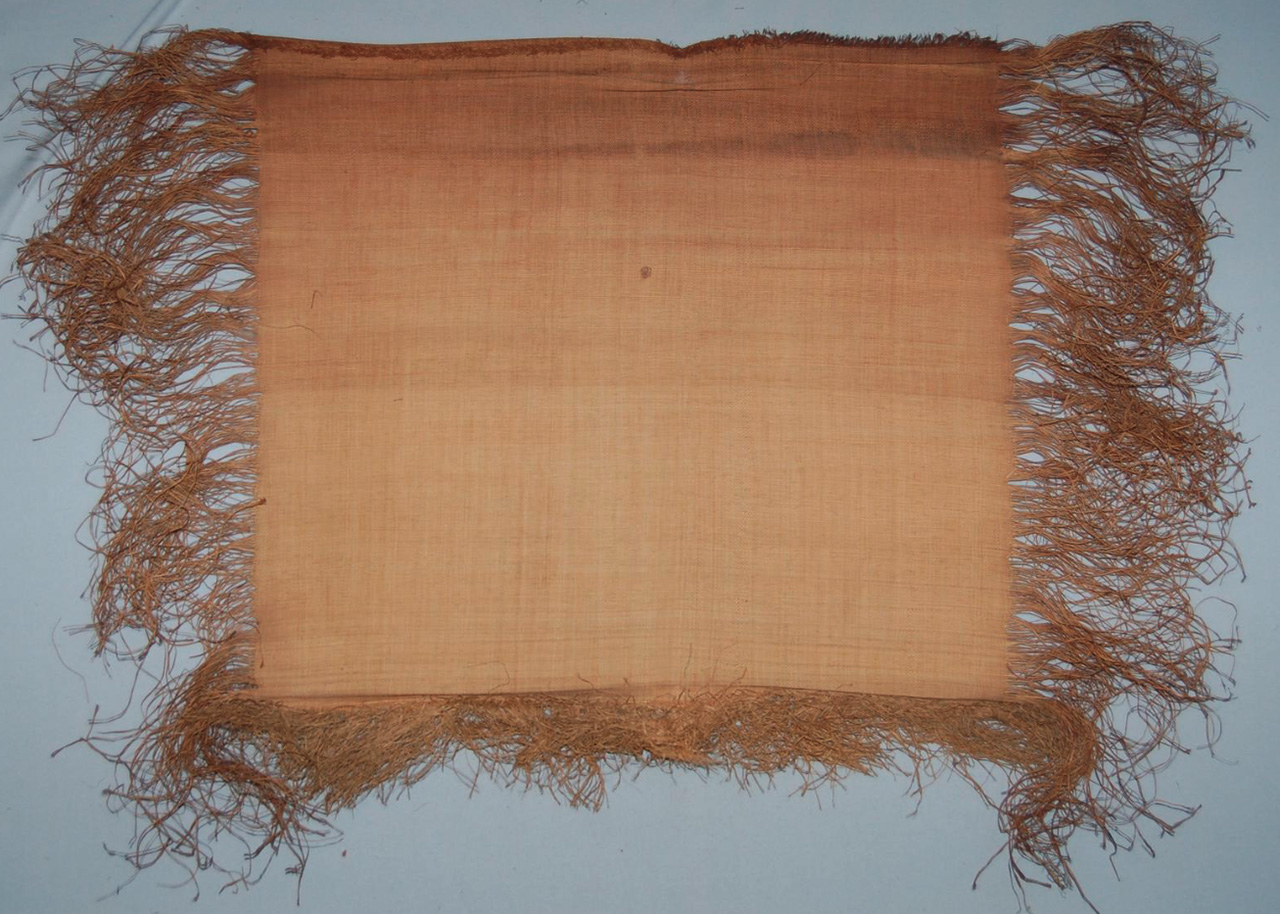
Its main function went beyond merely serving as a medium of exchange; it was a luxury item, a symbol of elite status, a medium of gift-giving in diplomacy, and a key object in many rituals and ceremonies, including weddings, funerals, and title-taking events.
The production of prestige cloth was a time-consuming, labour-intensive process that required great skill and often used expensive dyes and imported materials. Because of the difficulty in producing these cloths, their supply was limited, and their value was therefore significantly increased. One fine piece of cloth can be worth thousands of cowries or several iron bars, thereby qualifying it as a high-denomination store of wealth.
Kings and nobles amassed vast collections of these textiles as part of their treasuries. They would give cloth as rewards for loyalty, forge alliances with neighbouring kingdoms through gift exchanges, and showcase their power and generosity during public festivals. In some cultures, such as the Benin Kingdom, certain types of cloth were exclusively reserved for royalty. As a result, the value of these textiles was effectively priceless and not interchangeable in everyday trade.
Cloth holds a special place in the realm of social credits and obligations. When cloth is given as a gift, it forges a lasting bond of reciprocity and honour between the giver and

recipient. This highlights another essential aspect of the monetary systems described earlier. The highest value in these societies did not lie in abstracted metals but in objects that embodied cultural significance, artistic worth, and social ties. Therefore, cloth is not merely a form of currency; it is the physical representation of wealth as social capital.
Marketplaces, Networks and the Underpinnings of Trust
A currency system of this complexity could not exist without a strong institutional framework. Extensive networks of marketplaces facilitated the movement of goods and the exchange of various currencies. Periodic markets, such as those in Hausaland and those organised by the Aro Confederacy in Igboland, served as centres of trade and functioned as de facto financial hubs. The prices of cowries relative to other currencies were determined at these markets, and the overall value of the currencies relative to each other was stabilised.
The Aro offered an institutional framework for the exchange of goods over long distances and established settlements across culturally diverse regions through their extensive network of diasporans and their capacity to invoke divine authority.
The entire monetary system of pre-colonial Nigeria relied heavily on a sophisticated framework of trust. This trust was deeply rooted in culture and spirituality. Economic transactions were not just individual acts but were embedded within social relationships governed by shared norms, religious beliefs, and community oversight.
Economic transactions were further safeguarded through the use of curses or oaths to ensure contract compliance, the invocation of deities associated with trade and wealth (e.g., Ogun among the Yoruba), and the moral authority of elders and titleholders to resolve disputes. This trust was sufficient to enable the operation of credit systems and forward contracting without the need for written contractual agreements.
Additionally, the currencies themselves were often consecrated through use in religious ceremonies. Cowries were offered to deities, manillas were placed on shrines, and cloth was used in ritual attire. The association of the economic with the spiritual meant that failing to uphold trust was not merely a breach of contract but a breach of moral and cosmic law. Therefore, the establishment of the pre-colonial Nigerian monetary system was as much a cultural achievement as it was an economic one.

Conclusion
The pre-colonial economic systems of Nigeria were well-organised and innovative. The layered monetary system used in these systems (ranging from cowrie shells to cloth) enabled efficient trade, the storage of wealth, and accurate valuation across society. More importantly, the monetary system was deeply interconnected with the social, political, and spiritual aspects of the societies that used it. Economic activity was not separate from cultural life; instead, it was a vital part of it, guided by mutually understood norms and supported by shared beliefs and religions.
Appreciating the sophistication of these systems will help decolonise the study of economic history and increase awareness of indigenous African innovations. The real disruption did not come from the superiority of the financial system itself, but from the colonial imposition of a system that rejected these trusted, complex systems.
The lessons from these systems can guide the development of economic systems that tackle the complexities of human needs.

Oriiz is a Griot, Curator, Designer, Culture Architect, and Strategist who makes African history portable and accessible to everyone: those who know, those who question, and those who never thought to ask. He connects 8,000 years of knowledge with the present. Oriiz also edited and served as Executive Producer for The Benin Monarchy: An Anthology of Benin History (The Benin Red Book), Wells Crimson, 2019. Author: The Harbinger: A Window into the Soul of A People: 8000 years of Art in Nigeria, Crimson Fusion (2025).
:::::::: oriiz@orature.africa IG: @oriizonuwaje
