
By Oriiz U Onuwaje
Oriiz examines the emergence of this technological standard, tracing its roots to intricate, highly coordinated practices that developed across West Africa over a millennium. The story of lost-wax casting is not just about technical innovation but also about enduring human ingenuity and resilience. Imagine a workshop at dusk: the glow of the fire, the rhythmic bellows of apprentices, and the careful guidance of master metalworkers, who pass down secrets refined over centuries.
This investigation demonstrates how lost-wax casting became not only a symbol of artistic and technical achievement but also a means of passing on knowledge, identity, and values across generations. The essay thus highlights the lasting influence of these ancient methods and clarifies how the techniques and philosophies of lost-wax casting continue to influence modern manufacturing and specialised craftsmanship worldwide.

Origins and Cultural Significance of Lost-Wax Casting
In the annals of human creativity, few artistic revolutions demonstrate such technical mastery and cultural cohesion as the lost-wax casting tradition. This tradition thrived in West Africa from the 9th to the 19th centuries. It was not merely a technical process; it became a continent-wide standard that united diverse civilisations through shared values of precision, innovation, and symbolic communication. Art historian Frank Willett described it as “one of the most remarkable artistic achievements in human history” (Willett, 1967). These metal creations functioned as sophisticated archival systems, serving as three-dimensional databases that preserved essential knowledge long before modern books and computers.
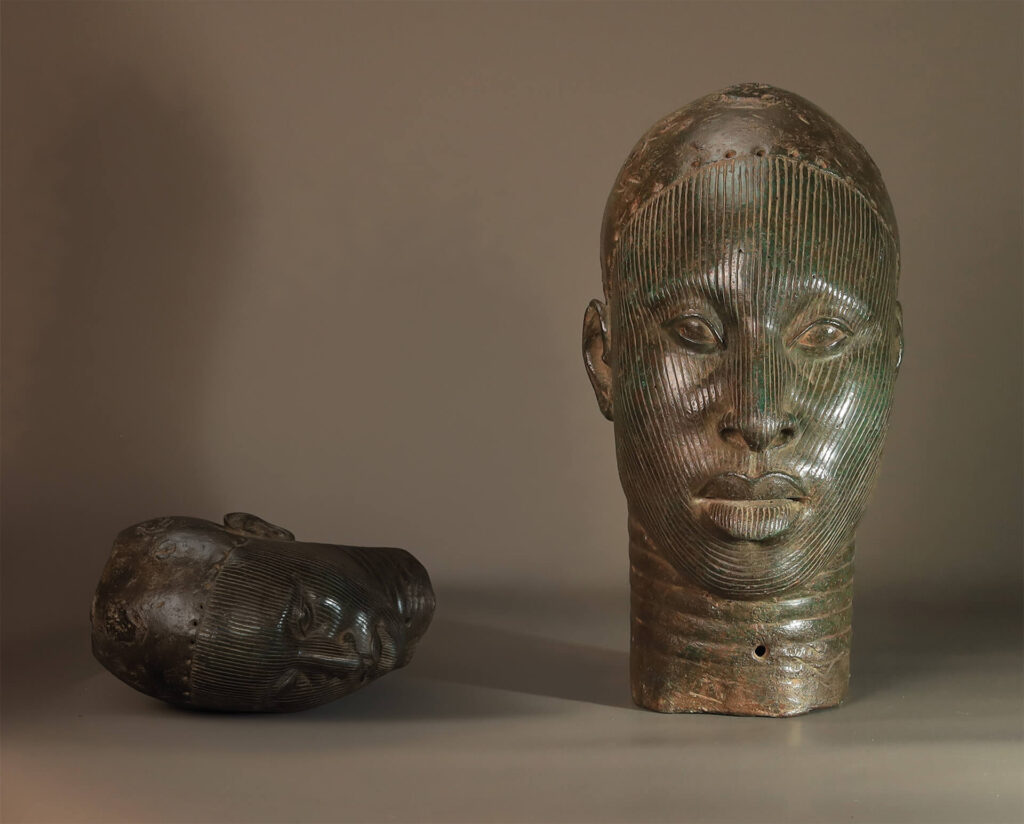
Ifè Bronze Memorial Head — 12 AD
The Lost-Wax Casting Technique Explained
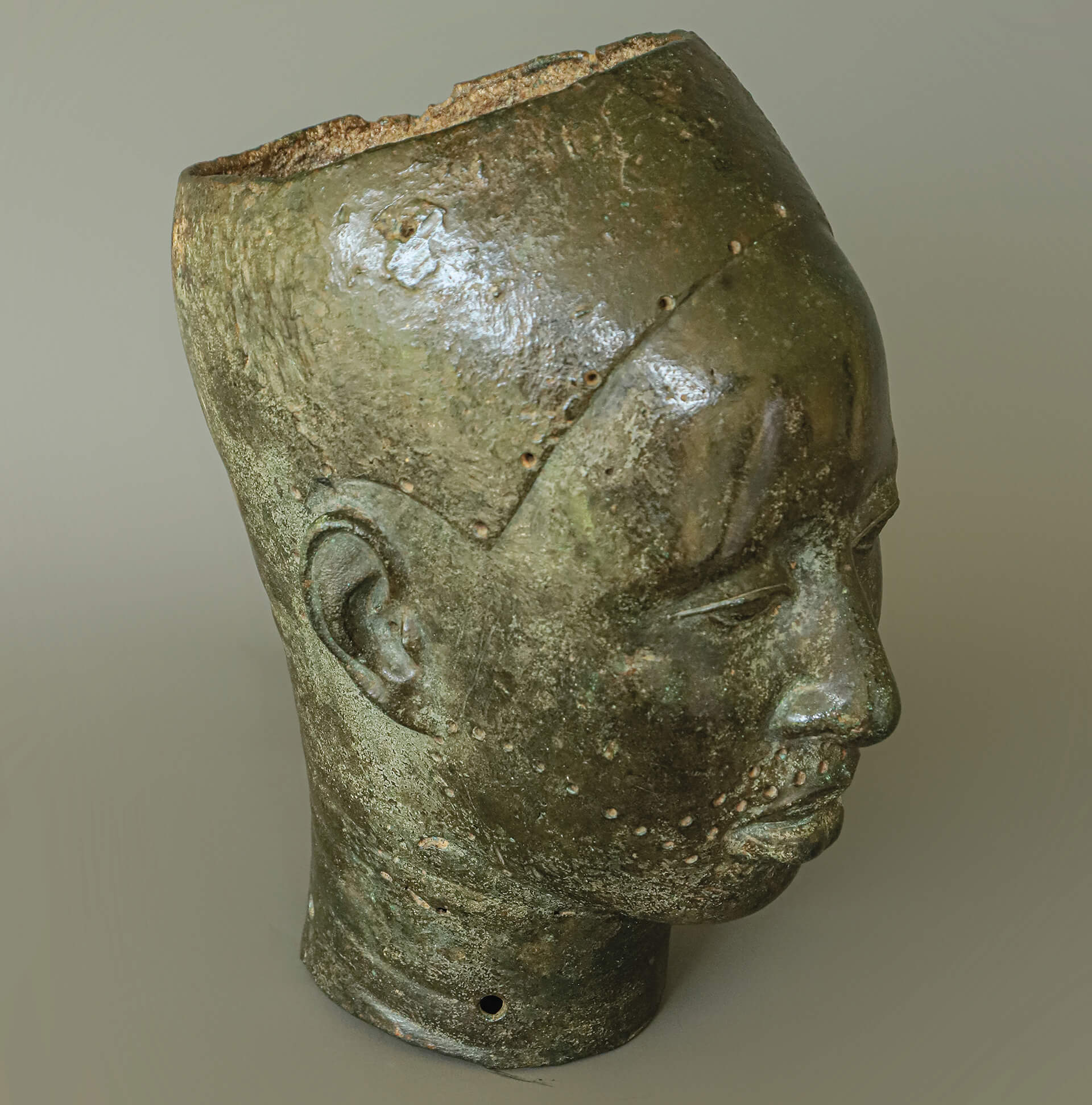
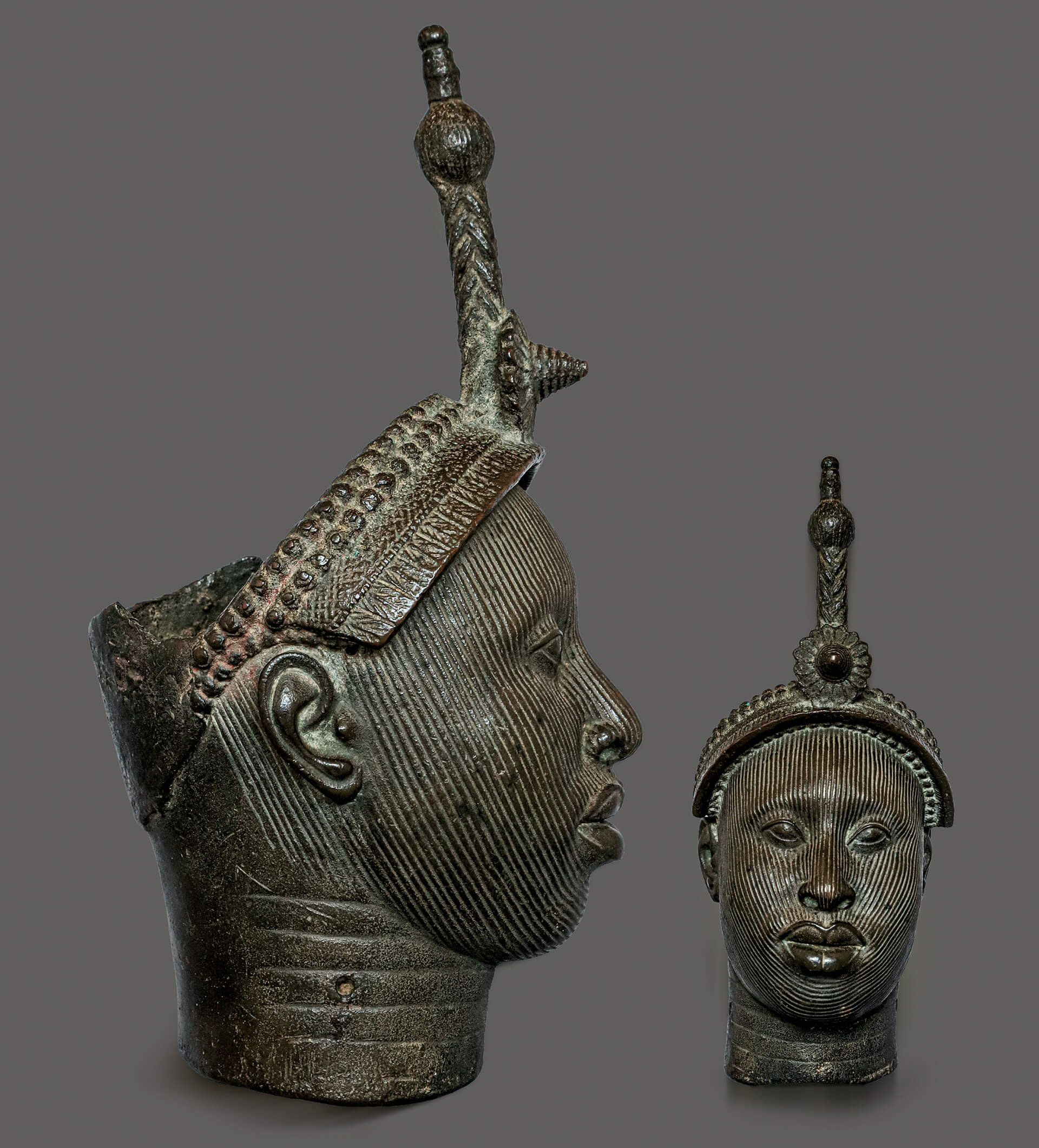
Ifè Bronze Memorial Head — 12 AD
The cire perdue (French for “lost-wax”) technique is an intricate, multi-stage process for casting metal objects. It begins with creating a clay core shaped like the final metal piece. Artisans then apply a layer of beeswax, which forms the object’s detailed model. Bone, wood, or ivory tools are used to carve intricate patterns into the wax. Next, they cover the wax model with several layers of clay paste, known as the investment mould, which will eventually hold the shape. After it dries, the mould is heated until the wax melts and drains out, leaving a hollow cavity. Molten metal, usually bronze, brass, or copper alloys, is then poured into this space. Once the metal cools and hardens, the clay mould is broken open to reveal the finished metal object, which is then filed, polished, and sometimes given a chemical finish called a patina.
Consistency and Adaptation Across Regions
This technological standard achieved remarkable consistency over great distances and cultures. Yet, it permitted considerable artistic variation. The process required technical skill and a thorough understanding of materials science. Metalworkers had to consider shrinkage, melting points, and metal flow. The uniformity across regions is notable. It indicates either widespread knowledge exchange or the independent development of similarly advanced solutions. Historian of technology Joseph Needham might have described this as “convergent technological evolution” (Needham, 1954).
Ife: Royal Archives and Technical Mastery
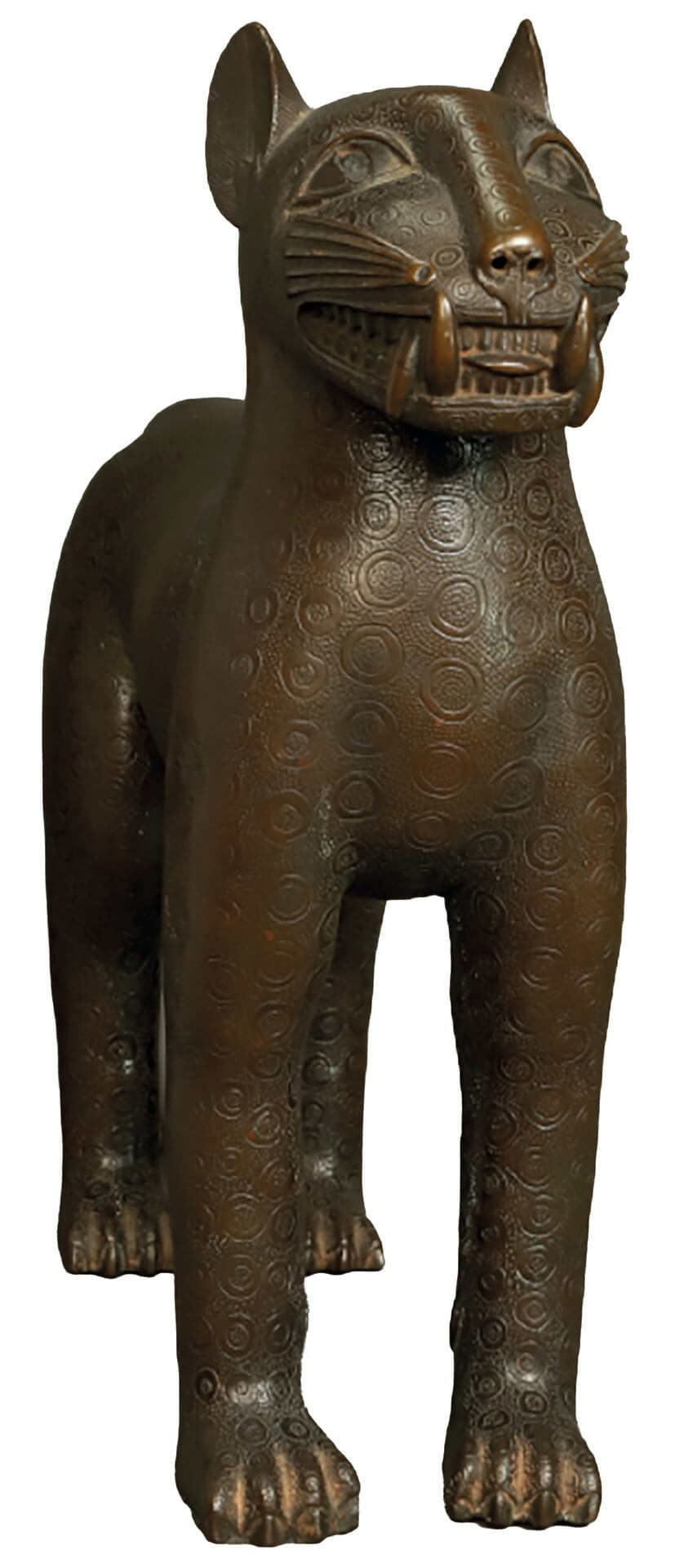
Benin Bronze Leopard — 16th Century
The centres of this revolution in Nigeria highlight the technical skill and cultural importance of lost-wax casting in great detail. Ife’s realistic bronze and copper alloy sculptures were made between the 12th and 15th centuries. They functioned as royal archives, preserving the likenesses of rulers and other prominent figures. These sculptures served as three-dimensional records, visually documenting leadership and succession in a society without written archives.
The remarkable precision of these castings is notable, especially since they were achieved without modern measuring or temperature controls.
Archaeological evidence suggests that Ife’s metalworkers developed advanced furnace technology capable of reaching the heat needed for bronze casting. They likely used bellows made from animal skins and clay tuyères to control airflow and temperature. The chemical composition of Ife bronzes shows consistent alloy proportions, indicating standardised preparation and quality control. This consistency suggests established workshop practices and structured systems for knowledge transfer.
Benin: Visual Databases and Statecraft
In the Kingdom of Benin, the lost-wax technique was the main method for documenting history and managing the state. The renowned bronze plaques that decorated the royal palace created a detailed visual record. These plaques documented court protocols, military campaigns, and diplomatic relations. According to historian Paula Ben-Amos, “these metal archives served functions comparable to modern national archives, preserving essential information about statecraft and governance” (Ben-Amos). The arrangement of these plaques indicates advanced principles of information management.
Benin’s bronzecasters guild, the Igun Eronmwon, developed a complex system of knowledge management and archival preservation. The guild maintained a living archive (an ongoing, actively updated body of knowledge) of technical information, historical facts, and artistic conventions. A hereditary apprenticeship system, where skills are passed down within families from one generation to the next, ensured the continuous preservation and updating of this knowledge base. This system worked similarly to modern digital backup systems for cultural information.
Igbo-Ukwu: Encrypted Digital Archives
The archaeological discoveries at Igbo-Ukwu in southeastern Nigeria uncovered a distinctive method involving lost-wax casting. Complex vessels and staffs discovered in burial contexts probably served as ritual archives. They held information about spiritual beliefs, cosmological ideas, and ceremonial practices. Unlike the public historical archives of Benin, these objects preserved esoteric knowledge for specialised religious practitioners. They operated much like encrypted digital archives with limited access.
Lower Niger Basin: Stylised Naturalism
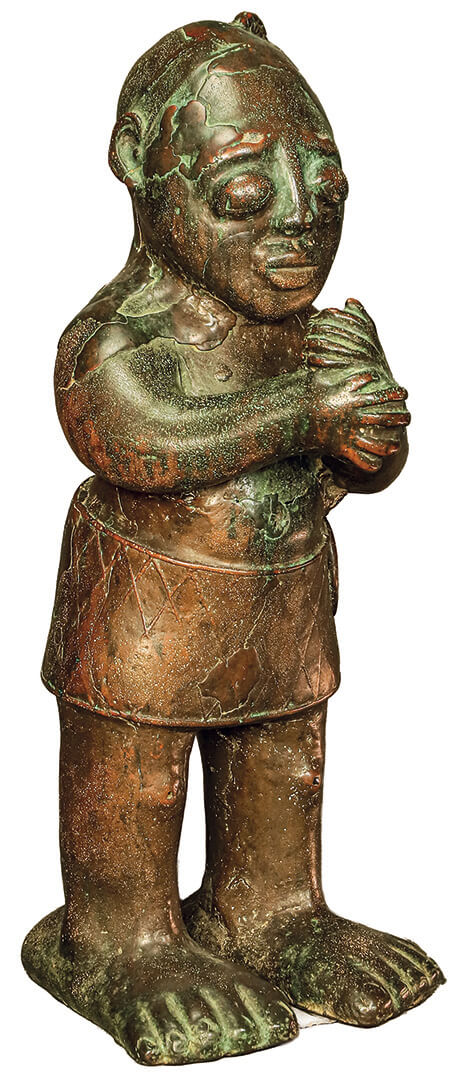
Bronze Figure from the Tada Corpus (Lower Niger Tradition)
Extending this narrative westward, the metalworking traditions of the Lower Niger Basin form a distinct node within this technological network. This region encompasses the Niger Delta and its hinterlands. It produced bronze and brass artefacts that differ stylistically from those of Ife and Benin but share the same technical standards. Works from Jebba, Tada, and the Benin River area display a stylised naturalism. They often feature elaborate scarification patterns and complex iconography. Art historian Philip M. Peek notes that these pieces “represent a distinct artistic vision within the shared technical framework of lost-wax casting, underscoring the adaptability of the medium to local cultural expressions” (Peek, 2008).
The iconic Tada figure is a life-sized copper-alloy sculpture, seated on a rock in the Niger River. It reflects this tradition. Its serene posture and detailed surface work show mastery of the lost-wax technique, comparable to that of the more renowned Ife heads. The presence of such refined works outside the main royal centres suggests that metallurgical skill was more common than previously thought. Archaeologist Kit W. Wesler argues that “the Lower Niger Bronze Industry represents a parallel tradition of exceptional skill, likely serving city-states and trading polities that flourished along the river networks” (Wesler, 2012). These objects probably functioned as archives, preserving community history, territorial claims, and the legitimisation of authority for the trading states controlling riverine commerce.
Beyond Nigeria
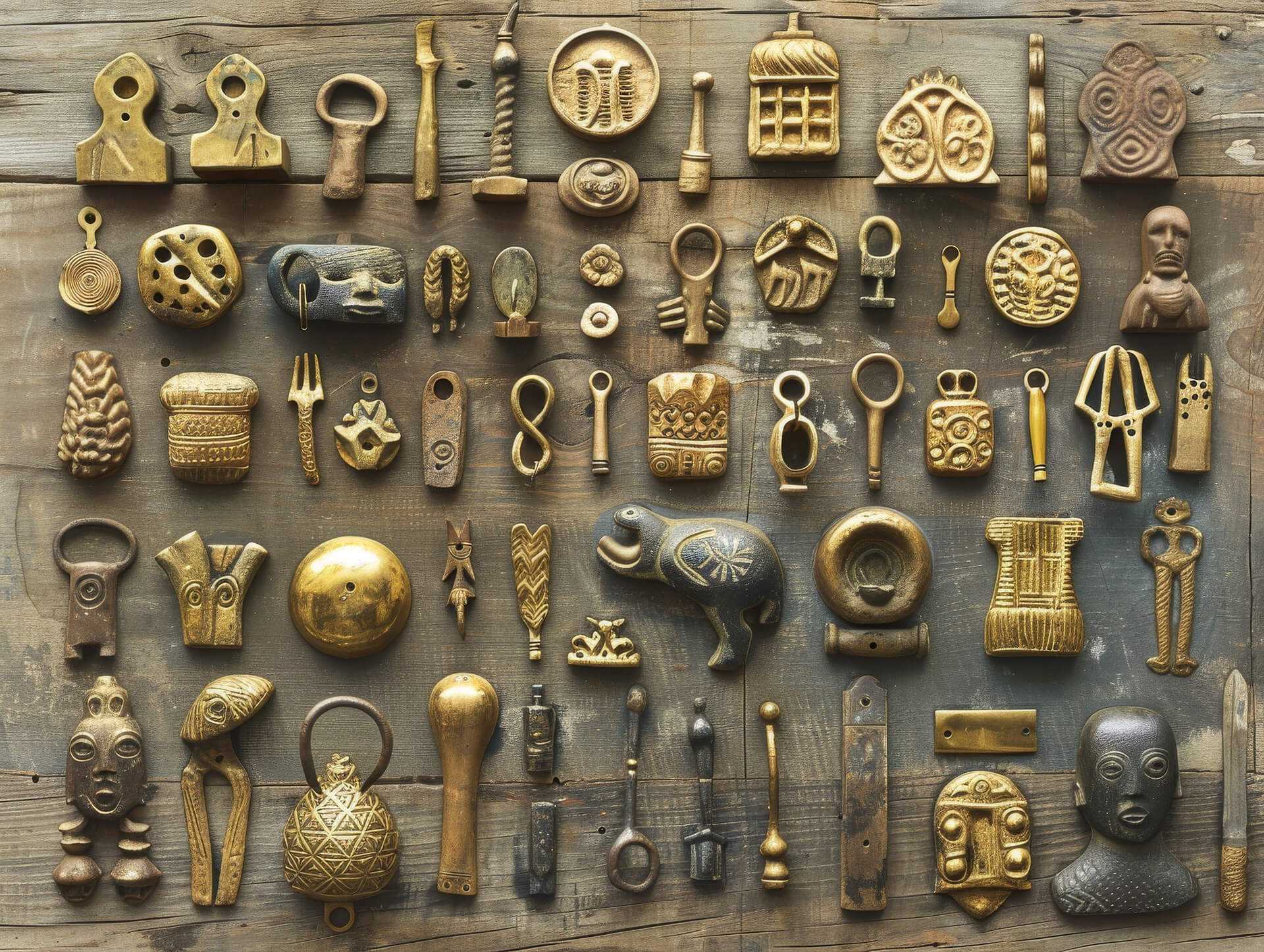
Akan Goldweights
Lost-wax casting adopted various archival forms tailored to local needs. In contemporary Ghana, Akan goldweights served as educational archives, encoding proverbs, ethical principles, and practical knowledge. Each weight functioned as a memory device, preserving cultural information in a durable metal form. Scholar Emmanuel Akyeampong stated, “these miniature archives made essential knowledge portable and accessible for daily reference, much like modern mobile computing devices” (Akyeampong, 2001).
The systematic organisation of Akan goldweights into standardised weight categories established a classification system. Different types of knowledge were connected to weight units, forming a sophisticated retrieval framework. Physical objects prompted recall of related information. This system demonstrates an advanced understanding of information architecture and knowledge management principles.
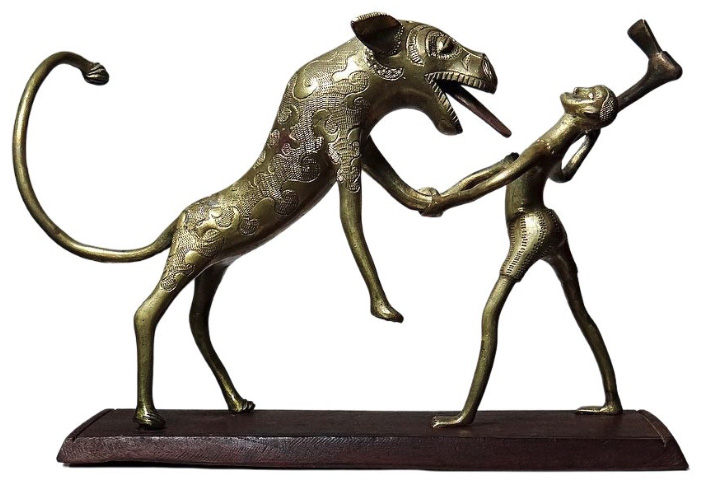
Bronze Figurine originating from the Kingdom of Dahomey
In the Kingdom of Dahomey, lost-wax castings functioned as spiritual archives. They preserved information about Vodun cosmology and ritual practices. These objects encoded complex theological ideas and ceremonial protocols in a durable form. This preserved religious knowledge across generations. The accuracy of these representations was deemed essential to maintaining ritual efficacy. This created strong incentives to keep precise information.
The guild systems, that is, formal organisations of skilled artisans, developed around Lost-Wax casting across West Africa, serving as living archival institutions (institutions actively preserving and transmitting knowledge). These organisations preserved technical knowledge, historical information, artistic conventions, and cultural values. Their hierarchical structure, with masters (experienced artisans), journeymen (artisans who have completed training but are not yet masters), and apprentices (learners), created distributed knowledge storage systems. These systems had built-in redundancy, much like modern distributed databases, which store data across multiple locations for reliability.
Traditional Lost-Wax casting incorporates materials science knowledge, including an understanding of the properties of metals and other substances, as another form of archived information. Metalworkers learned about the properties of alloys (metals made by mixing two or more elements) through generations of experimentation. They preserved this knowledge through oral traditions (stories and teachings passed down by word of mouth) and practical demonstrations. This technical knowledge allowed continued production excellence over centuries.
Lost-Wax casting’s significance extends into modern information management. Encoding information in durable, three-dimensional formats anticipates data preservation techniques such as microfilm, digital storage, and blockchain. The distributed preservation methods of traditional guilds mirror today’s cloud storage and distributed databases.
Information Preservation
The philosophical method of information preservation seen in Lost-Wax casting provides valuable insights for modern digital preservation practices. Combining various preservation techniques, technical expertise, artistic traditions, and social institutions creates resilient systems for cultural continuity. This layered approach to safeguarding knowledge remains pertinent in an age of rapidly evolving digital storage technologies.
The environmental sustainability of traditional information preservation through metal objects provides another key lesson. Unlike digital storage, which demands ongoing energy and technological updates, metal archives passively safeguard information for centuries. This method of durable storage resonates with modern concerns about digital obsolescence and the environmental impact of continuous data centre operation.
Conclusion
In conclusion, the Lost-Wax revolution in West Africa, from the iconic centres of Ife and Benin to the prolific workshops of the Lower Niger Basin, exemplifies a sophisticated, decentralised system for preserving information and managing knowledge. These metal objects served as durable archives, preserving historical, cultural, and technical information across generations. The systems developed around their creation and maintenance demonstrate an advanced and widespread understanding of information architecture, knowledge preservation, and cultural continuity, with a truly continent-wide scope.
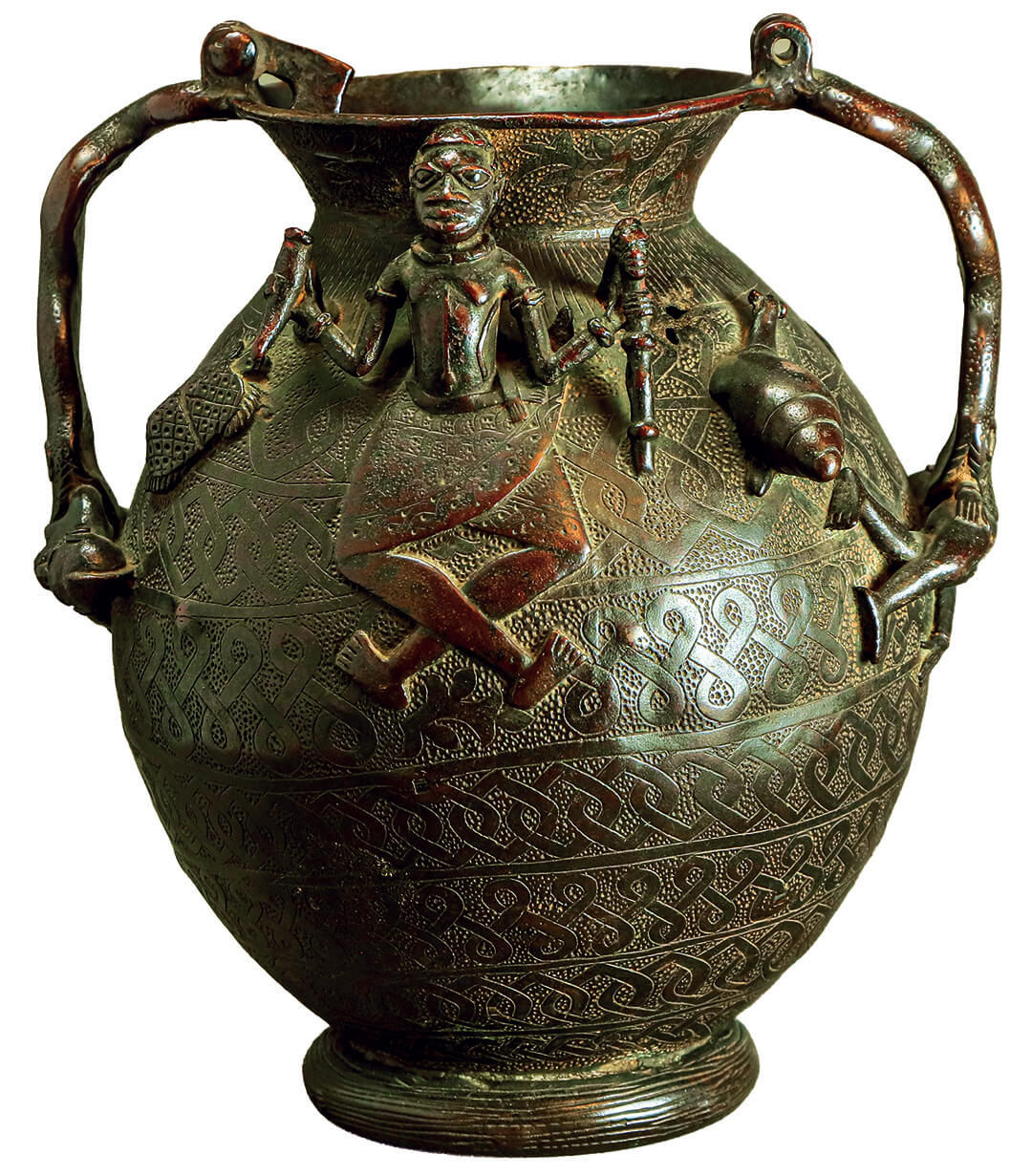
Benin Bronze Ritual Pot — 16th Century
The significance of lost-wax casting extends beyond history. Today, its principles are evident in modern investment casting techniques used in aerospace and biomedical engineering, where the need for precision and complexity reflects the skills developed by West African artisans. In art, contemporary sculptors worldwide, such as Sokari Douglas Camp in the UK and El Anatsui in Ghana, continue to adapt and reinterpret lost-wax methods, recognising their roots while innovating for the present.
The integration of information preservation with artistic expression and technological innovation resulted in multifunctional objects that benefited their societies in various ways. This holistic approach to knowledge management provides valuable lessons for today’s information society, where specialisation often separates technical, artistic, and archival functions. The durability of these metal archives over centuries stands as a testament to their effectiveness as information preservation systems.
It is also crucial to consider why this technological tradition remained so resilient. The robust apprenticeship systems, the social prestige of the bronzecasters, and the deep integration of artistic, spiritual, and political life ensured that knowledge was not merely stored but lived, performed, and renewed. In pre-literate societies, these objects embodied memory and authority, functioning as living documents and active participants in community life. While scholars continue to debate the origins, spread, and cross-cultural influences of West African lost-wax casting, its distinctive role in shaping identity and power remains evident.
As we develop new technologies for digital preservation and knowledge management, the principles embedded in the Lost-Wax tradition remain profoundly relevant. The value of durable storage media, distributed knowledge systems, and the integration of information with cultural practice all offer important insights for addressing contemporary challenges of information preservation. This remarkable chapter in human technological development continues to inform our understanding of how societies can preserve essential knowledge across generations.
Looking ahead, as we face digital obsolescence and environmental issues related to data storage, the enduring nature of cast metal objects offers valuable lessons. The traditional lost-wax technique’s combination of durability, flexibility, and cultural significance serves as a model for harmonising innovation with sustainability in the digital era. We can also learn from how West African artisans embedded memory into objects that were both beautiful and functional, making information accessible, meaningful, and lasting.
References
Akyeampong, E. (2001). Between the Sea and the Lagoon: An Eco-social History of the Anlo of Southeastern Ghana. Ohio University Press.
Ben-Amos, P. (1999). Art, Innovation, and Politics in Eighteenth-Century Benin. Indiana University Press.
Blier, S. P. (2015). Art and Risk in Ancient Yoruba: Ife History, Power, and Identity, c. 1300. Cambridge University Press. Journal of Materials Processing Technology. (2021). Advanced Investment Casting Techniques for Complex Components. Elsevier Press.
Needham, J. (1954). Science and Civilisation in China. Cambridge University Press.
Peek, P. M. (2008). Step Style: Meaning and Change in African Art. African Arts, 41(2), 14-25.
Rush, D. (2013). Vodun in Coastal Benin: Unfinished, Enduring Stories. University of Washington Press.
Shaw, T. (1970). Igbo-Ukwu: An Account of Archaeological Discoveries in Eastern Nigeria. Faber & Faber.
Silverman, R. A. (1983). Akan Transformations: Problems in Ghanaian Art History. University of California Press.
Wesler, K. W. (2012). An Archaeology of West Africa’s Craft Landscapes. In J. C. Monroe & A. Ogundiran (Eds.), Power and Landscape in Atlantic West Africa (pp. 317-341). Cambridge University Press.
Willett, F. (1967). Ife in the History of West African Sculpture. Thames and Hudson.

Oriiz is a Griot, Curator, Designer, Culture Architect, and Strategist who makes African history portable and accessible to everyone: those who know, those who question, and those who never thought to ask. He connects 8,000 years of knowledge with the present. Oriiz also edited and served as Executive Producer for The Benin Monarchy: An Anthology of Benin History (The Benin Red Book), Wells Crimson, 2019. Author: The Harbinger: A Window into the Soul of A People: 8000 years of Art in Nigeria, Crimson Fusion (2025).
:::::::: oriiz@orature.africa IG: @oriizonuwaje

Leave a Reply