Our Weaver’s Beam and Algorithms:
Decoding the Digital Logic of Aso Oke, Akwete and Kente

By Oriiz U Onuwaje

Oriiz examines how the logic behind Aso Oke, Akwete, and Kente weaving shapes computation, creativity, and culture, and how it influences today’s fashion. By studying these textile arts, this essay shows how they connect ancient craft with modern technology.

The Technology of Touch

Today, technology is often seen as cold, defined via screens, silicon chips, and silent signals. We treat it as a modern invention, a rupture from a tactile, handmade past. This is a narrow view. When technology is understood as the application of logic to solve problems and communicate, a much older story appears.

With this perspective, the loom is like an intelligent machine. The weaver uses logic, and the textiles become a way to tell stories, a kind of early information technology.

Download PDF version of Essay

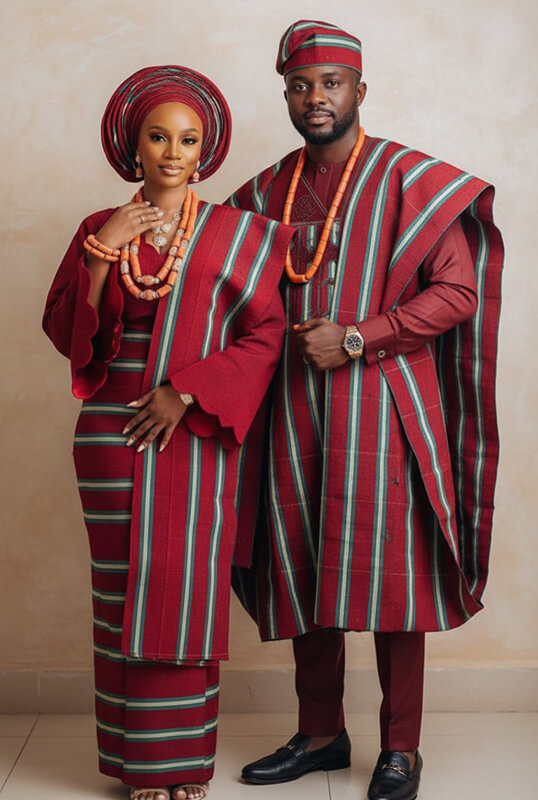
West African weaving vividly illustrates this tradition. While Aso Oke, Akwete, and Kente are the most recognised examples, many other textiles also shape the region’s rich heritage. For centuries, the Ashanti, Ewe, Yoruba, and others have practised crafts that are fundamentally computational. Kente’s detailed geometry, Aso Oke’s structural precision, and Akwete’s colourful motifs do more than decorate; they encode meaning and logic as tangible algorithms. Communities actively use these fabrics to express identity, weaving their stories and values into every thread.

This essay explores the links between African strip-weaving and digital coding. Weavers mastered logic, patterns, grids, repetition, and storing information long before computers existed. These same ideas shape both today’s data and modern African-inspired fashion.
African-inspired fashion

Akwete Weaving

The Loom as the Original One Binary System

To see how weaving and coding connect, we need to start with the basics of computing: the binary system. Modern computers use two states: 0 and 1, Off and On. Everything on a screen, from a text message to a video game, is made from billions of these tiny switches.

Surprisingly, weaving works in a similar way. The main action on a loom is a simple choice between two options.

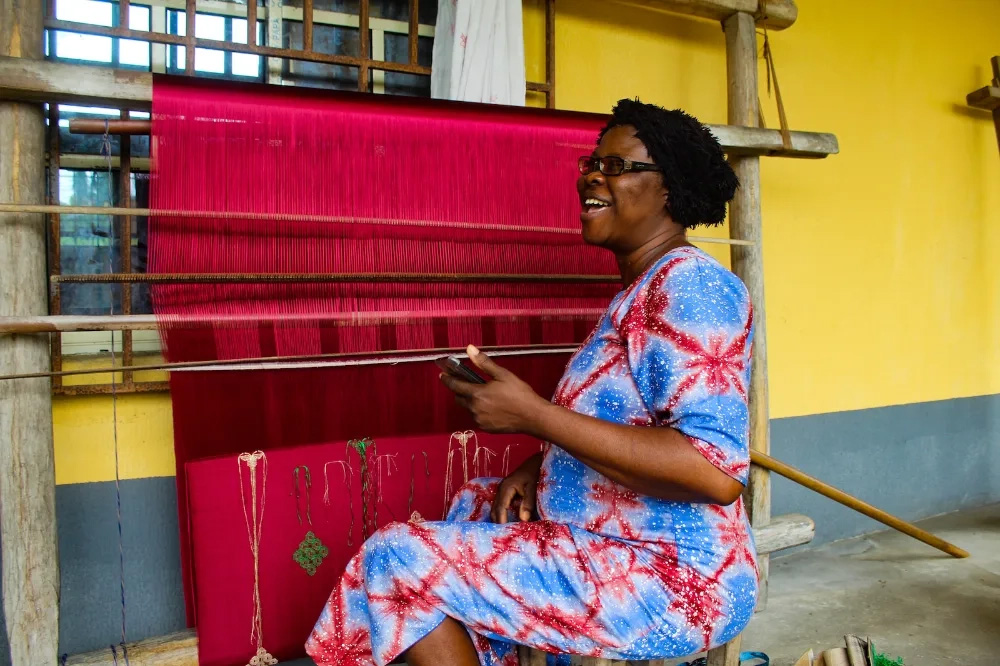
The warp threads, which run vertically, are kept tight. The weft threads, running horizontally, pass through them. At each crossing, the weaver chooses to go over or under, up or down, visible or hidden.
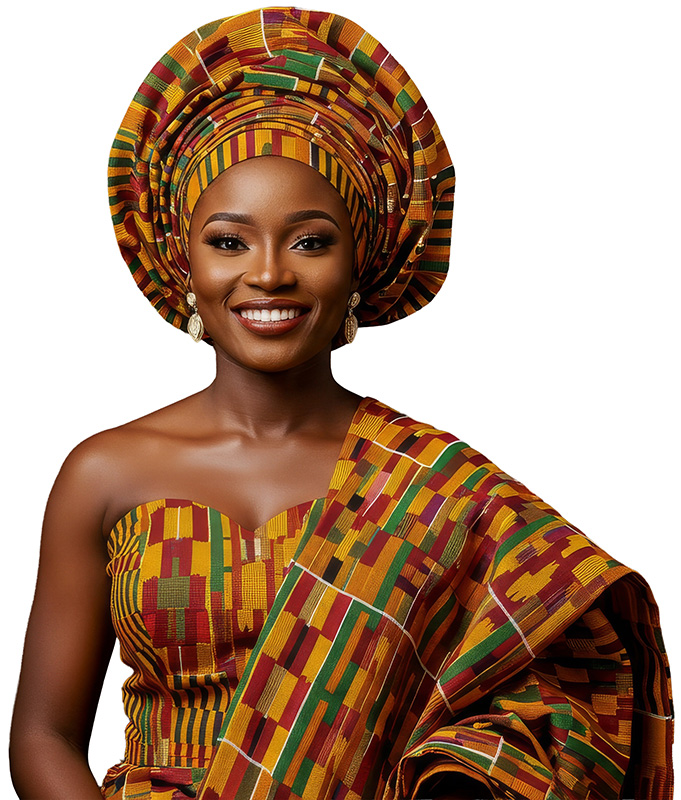
Traditional african attire portrait vibrant kente headwrap and dress

Traditional african attire portrait vibrant kente headwrap and dress

This process is like the source code for the cloth. Every pattern, no matter how complex, comes from thousands of simple, ordered choices, just like lines of code in a computer program.

Historians often say the 19th-century Jacquard loom was the first step toward computers, but African weavers were already running complex ‘programs’ in their minds much earlier. Instead of using punch cards, they memorised patterns, worked out detailed sequences, and wove them with great skill.

Kente: Building Blocks of Meaning

The tradition of Ghana, practised by the Ashanti and Ewe peoples, presents a perfect example of what designers call “modular design”.

In the digital world, we break down complex systems into smaller, manageable parts that we can rearrange. Kente weavers do something similar. Instead of making one large sheet, they weave long, narrow strips, usually about four inches wide.

After weaving, the strips are sewn together side by side, allowing for creative designs. Patterns in each strip can be shifted or mirrored to make new looks. Each arrangement offers many possibilities and tells its own story.

The names of Kente patterns show that it is more than just fashion; it is also an information system. The cloth holds meaning and tells stories.

“Fathia Fata Nkrumah” is a pattern celebrating the marriage of Ghana’s first president to Fathia of Egypt, thereby recording political history in thread.

“Sika Dwa Kofi” (The Golden Stool) represents the soul of the Ashanti nation.
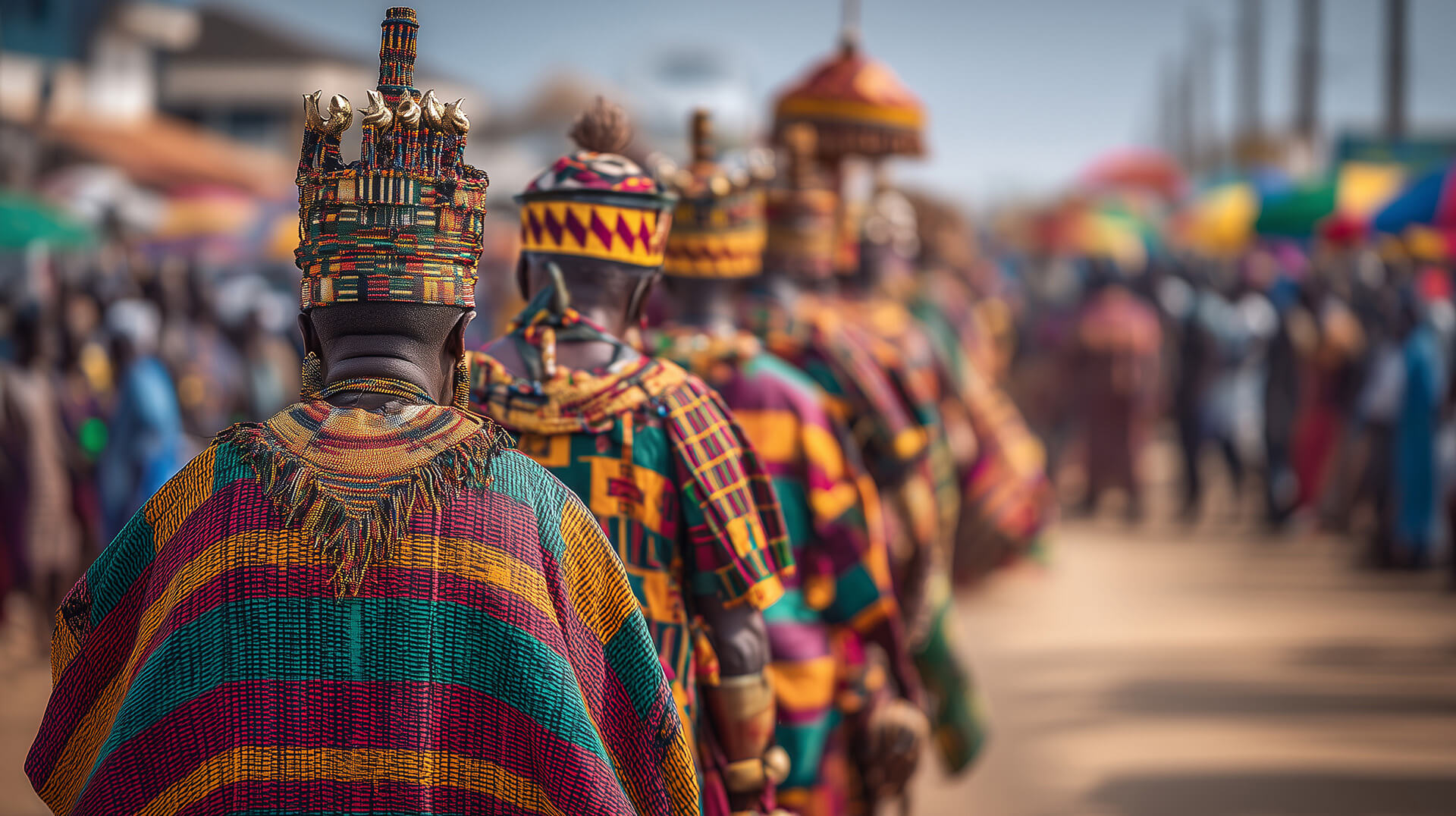
Fetu Afahye Festival Ghana traditional chiefs in colorful kente cloth parade cultural heritage celebration African royalty ceremony Cape Coast festival

Fetu Afahye Festival Ghana traditional chiefs in colorful kente cloth parade cultural heritage celebration African royalty ceremony Cape Coast festival

One of the most impressive patterns is “Adwini Asa”, meaning “All motifs are exhausted.” In this design, the weaver aims to include every known geometric pattern in a single cloth. It shows great skill and memory, a real-life encyclopedia of the weaver’s knowledge.

The Ewe tradition of Kente goes even further, weaving images of hands, combs, and animals into the geometric grid. Creating a curved shape, such as a hand, using only vertical and horizontal threads requires a deep understanding of the grid. The weaver breaks the curve into small steps, much like how a digital image is made of pixels. They were “pixelating” images long before computer screens existed.

Aso Oke: The Language of Social Identity
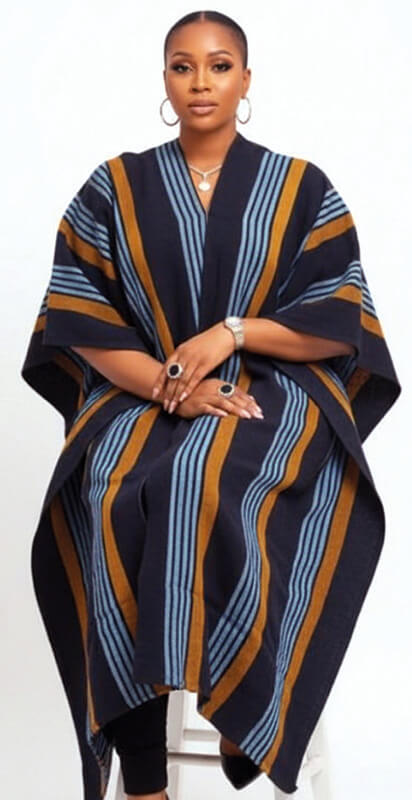
Aso Oke II Aso Oke I

If Kente shows how to make complex patterns from simple parts, the Yoruba Aso Oke (Top Cloth) tradition shows how cloth can work as a language.
In Yoruba culture, Aso Oke is a respected means of communication. It acts as a visual signal, showing your age, wealth, religion, and the event you are celebrating. Like any language, it has rules. You cannot mix the “words” (patterns) randomly without causing confusion.

The “Classic Three” styles of Aso Oke act as the basic vocabulary of this system:

  1. Sanyan: Often called the “King of Clothes,” this is made from the beige silk of the Anaphe moth. It represents the raw, natural earth. It signals seniority, traditional authority, and steadfastness.
  2. Etu: A deep indigo-dyed cloth. The name means “guinea fowl,” referring to the tiny white speckles on the blue background. This pattern signifies wisdom, calmness, and depth. It is a quiet, serious cloth.
  3. Alaari: A bright crimson cloth. It signals visibility, power, and vital life force. It is the cloth of presence.

The Aso Oke artisan relies on repetition and rhythm in their work. Patterns often show a “strip within a strip.” A big block of colour is divided by a smaller stripe, which is then divided by an even thinner thread.
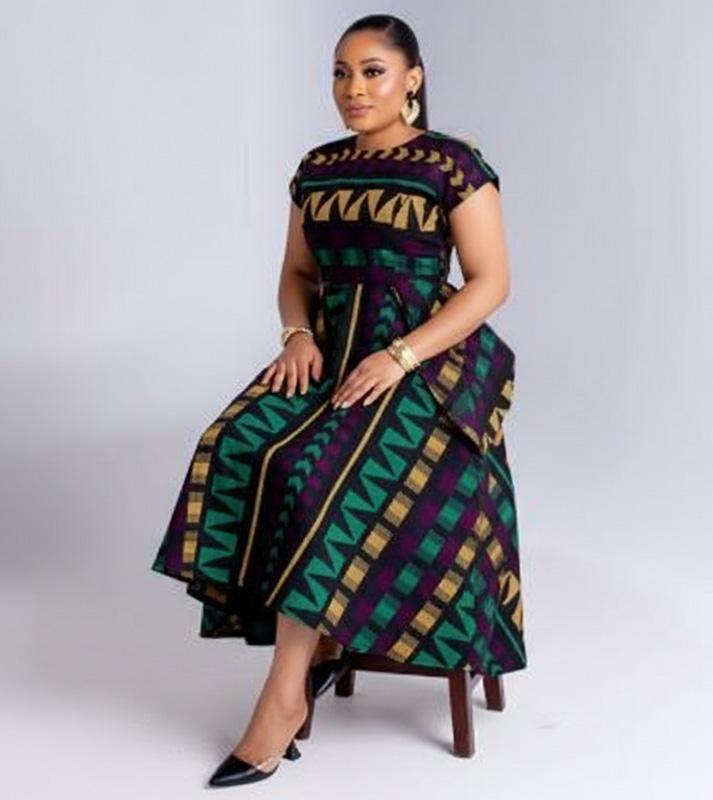
Akwete 01

Akwete 01

Repeating shapes at different sizes is similar to what mathematicians call “fractals.” While Western geometry often focuses on smooth shapes like circles and triangles, African design highlights texture and repetition. The weaver measures these spaces not with a ruler, but with rhythm and counting, making a pattern that feels musical.

Akwete weaving, done by the Igbo people in southeastern Nigeria, is unique. Using a wide loom, Akwete weavers make large, detailed textiles known for their technical creativity. Their bold designs and rich textures reflect family heritage, mark special events, and continue to inspire modern fashion across Africa and beyond.

The “Human” Glitch: Perfection within Imperfection

In computer programming, a “bug” is a mistake that needs to be fixed. We expect our apps and software to be perfect and flawless. But African weaving sees “errors” differently.

In many African craft traditions, people believe only God can be truly perfect. Because of this, a small flaw, like a skipped thread or a slight change in the strip’s alignment, is sometimes left on purpose or accepted as the maker’s signature.

Today, as people question the idea of perfection in the digital world, designers are once again valuing imperfection. Generative art programs introduce randomness to avoid a uniform look. African weavers understood this long ago. The small differences in hand-woven Aso Oke, compared to the flat look of factory prints, show value and authenticity; they prove the cloth was made by hand. Here, the ‘bug’ is a mark of originality.
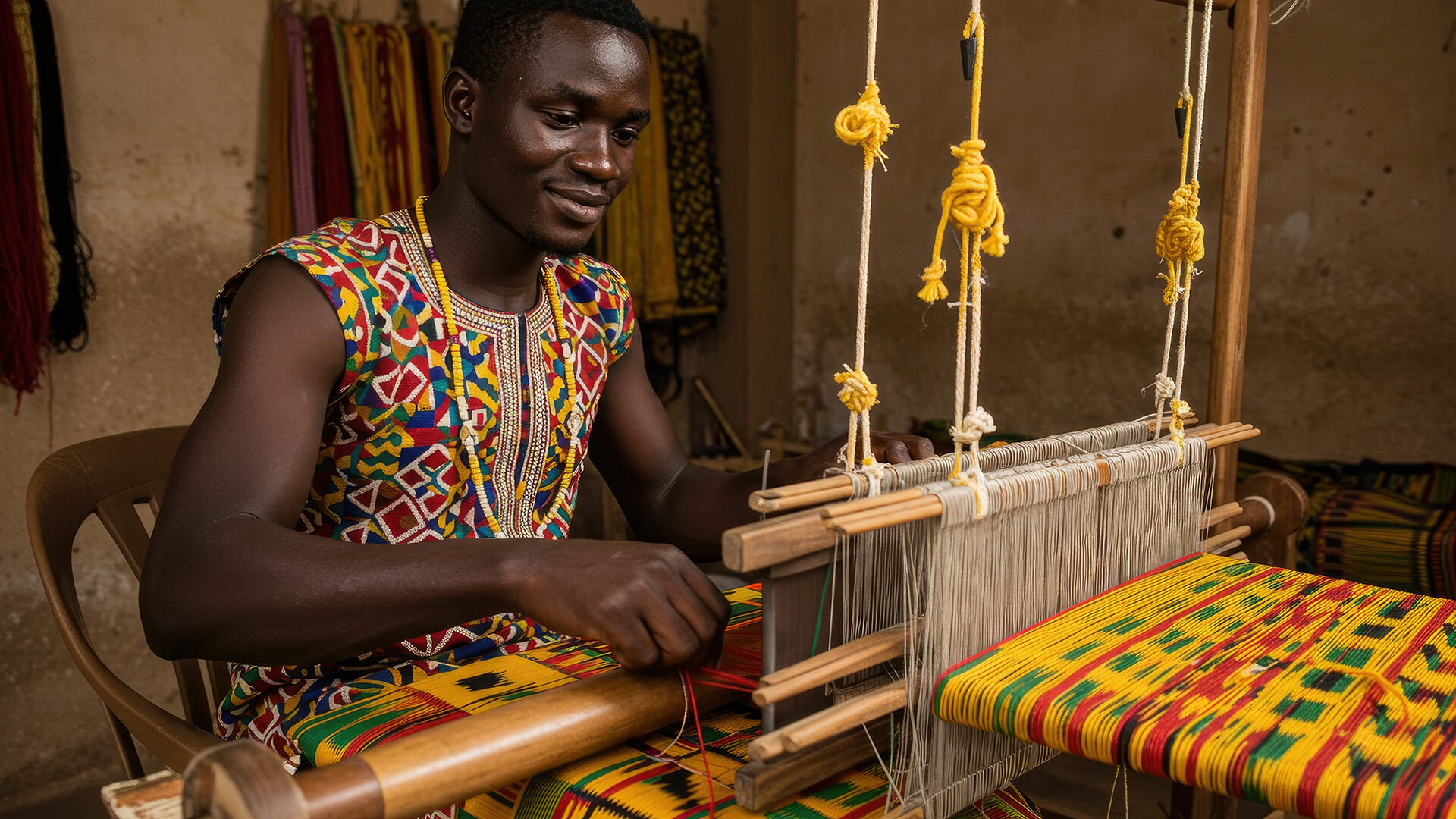
Weaver

Weaver

The Loom as Hardware, The Culture as Software

To truly understand the weaver’s skill, we need to look at their main tool: the loom. The West African narrow-strip loom is a great example of efficient engineering.

The weaver sits with the warp threads stretched out ahead, sometimes for many yards, held in place by a heavy stone or drag-sledge. This long warp stands for memory, the cloth that is yet to be made. The heddles, which lift the threads, are the controls. The shuttle, a wooden tool that carries the thread, acts like a cursor, creating each line of cloth.

But the loom is useless without its “software”, the cultural knowledge passed down through generations. This knowledge isn’t found in books; it’s learned by watching. An apprentice observes the master, picking up the rhythm of hands and feet until the logic becomes second nature.

This way of learning keeps the tradition alive while allowing for change. When a master weaver creates a new pattern to mark a modern event, like the “Obama” patterns made in Ghana in 2008, it’s similar to a software update. The old loom is used to record new history.
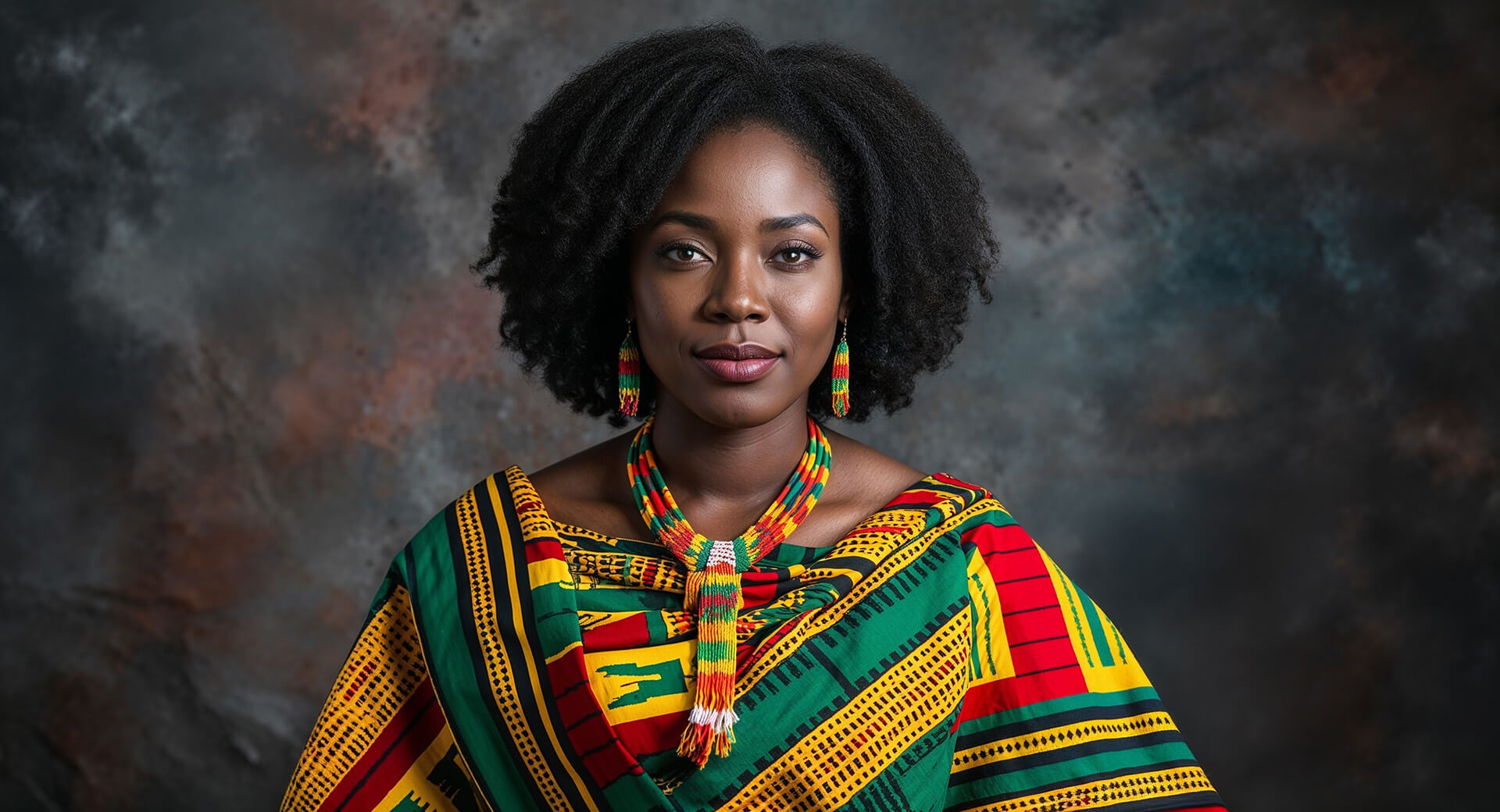
Ghanaian woman in kente cloth proud expression portrait photo festive landscape

Ghanaian woman in kente cloth proud expression portrait photo festive landscape

Connecting the Divide: From Loom to Laptop

Why does this comparison matter? Why should we compare a weaver to a computer scientist?

This matters because history has often ignored Africa’s intellectual achievements. When we call weaving a “craft” and coding “technology,” we downplay the skill needed to make these textiles. Recognising the logic in weaving changes this view. It shows that complex, structured thinking is not just for modern tech companies; it is part of Africa’s heritage.
Now, this connection shapes the future of African design, as digital and physical worlds come together in a new wave of creativity.

Digital Art: Today’s African artists use textile patterns to make digital art. They notice that Kente grids look a lot like the data visualisations seen in modern analytics.
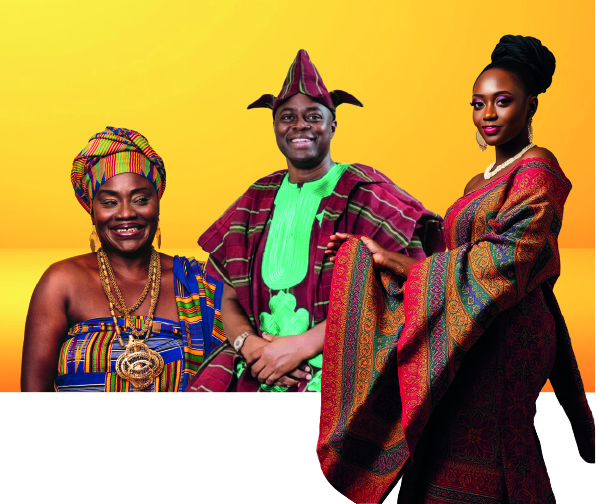
New Fashion: Designers now use computer software to create textile patterns that follow the rules of Aso Oke, creating designs no human weaver has made before. This blends old logic with modern technology. Global fashion shows are embracing these trends, and major brands are inspired by the bold shapes, deep meanings, and technical details of Aso Oke, Kente, and Akwete. The influence of African weavers appears in collections from London to Lagos, Paris to New York, as designers use this digital logic in cloth and set new trends that echo the creativity of traditional looms.

Wearable Tech: As we develop “smart clothing”, clothes that can track health or change colour, the logic of the loom becomes more important. If we are going to wear our computers, then the old masters of “programmable cloth” have the most useful knowledge.

Conclusion: The Unbroken Thread
At the start, this essay promised to explore “Threads and code: weaving philosophy into cloth and logic.” We see now that these are not separate ideas. They are just different ways of speaking the same language.

The weaver sits at the loom, counting threads, measuring spaces, and balancing the tension between the fixed past, the warp, and the changing present, the weft. The coder sits at a keyboard, setting variables, building loops, and balancing the computer’s logic with the user’s needs.

Both are architects of systems, turning chaos into something understandable.

As we go further into the digital age, we should not see Kente, Aso Oke, and Akwete as just old memories. Instead, we should respect their complexity and see them as masterpieces of logic and living systems that still influence fashion, technology, and culture.

The African weaver did more than make cloth. They created an information system from cotton and silk, putting their culture’s values into a form that could travel, last, and communicate. In a real sense, they were the first creative technologists, leaving us proof that the future was never just about silicon; it was always about the thread.

The logic continues, an unbroken thread from the ancestor’s loom to the descendant’s laptop, weaving the world together, one choice at a time.


Oriiz
Oriiz is a Griot, Curator, Designer, Culture Architect, and Strategist who makes African history portable and accessible to everyone: those who know, those who question, and those who never thought to ask. He connects 8,000 years of knowledge with the present. Oriiz also edited and served as Executive Producer for The Benin Monarchy: An Anthology of Benin History (The Benin Red Book), Wells Crimson, 2019. Author: The Harbinger: A Window into the Soul of A People: 8000 years of Art in Nigeria, Crimson Fusion (2025).
:::::::: oriiz@orature.africa IG: @oriizonuwaje
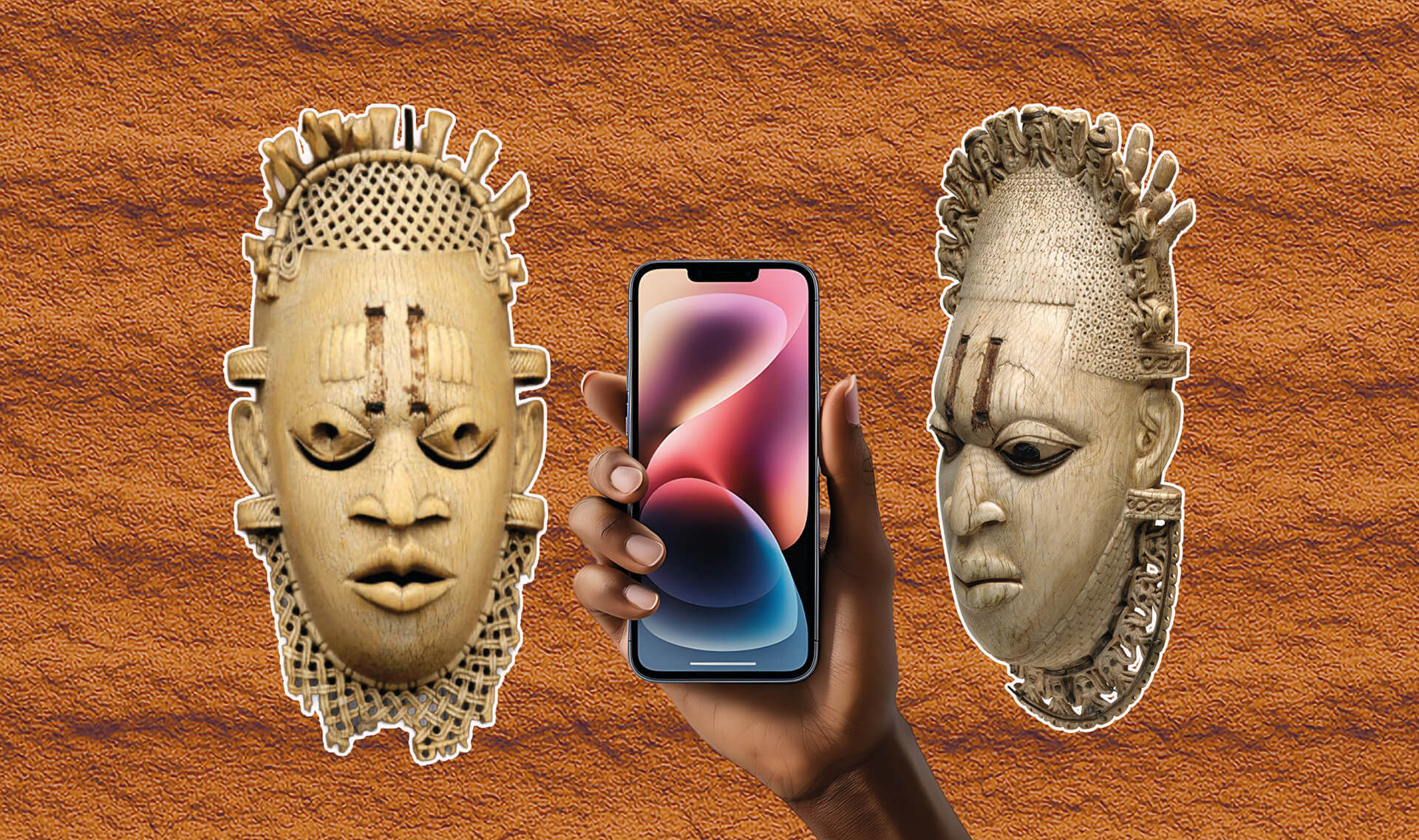
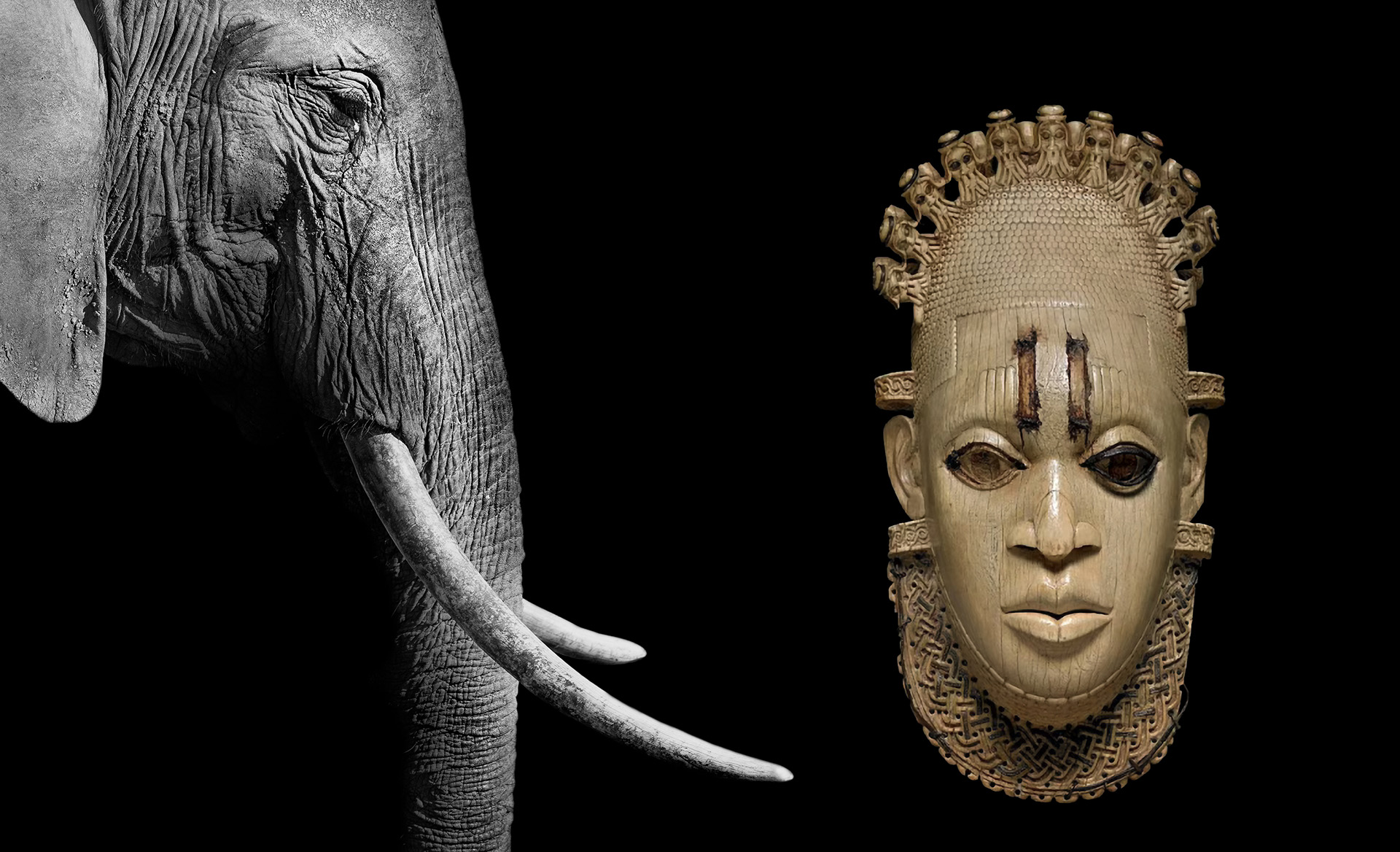
From the Queen Idia Ivory Mask to the iPhone: Design as an Act of Civilisation

By Oriiz U Onuwaje

Oriiz views design as more than decoration. He sees it as a tool that shapes and stabilises power, identity, and continuity. Throughout history, people have used objects for more than beauty. They use form to pass on memory, organise authority, and make hidden systems visible. What we now call design innovation is part of a long tradition: shaping materials to carry meaning across time and place.

Continuity in Design Intelligence

Five centuries ago in Benin, court artists addressed this challenge in ivory. Today, designers address it in glass, silicon, and metal. The contexts differ. The materials differ. But the underlying ambition is strikingly similar. It is the desire to engineer form to hold power, project identity, and mediate connection past the immediate moment.

Although separated by five centuries, designers in Benin and today face the same challenge: making form carry power, identity, and connection across time and space. The materials are different, but the thinking behind the design remains the same. Time separates them, not their design intelligence.

Download PDF version of Essay
 

Benin, Authority, and Engineered Form

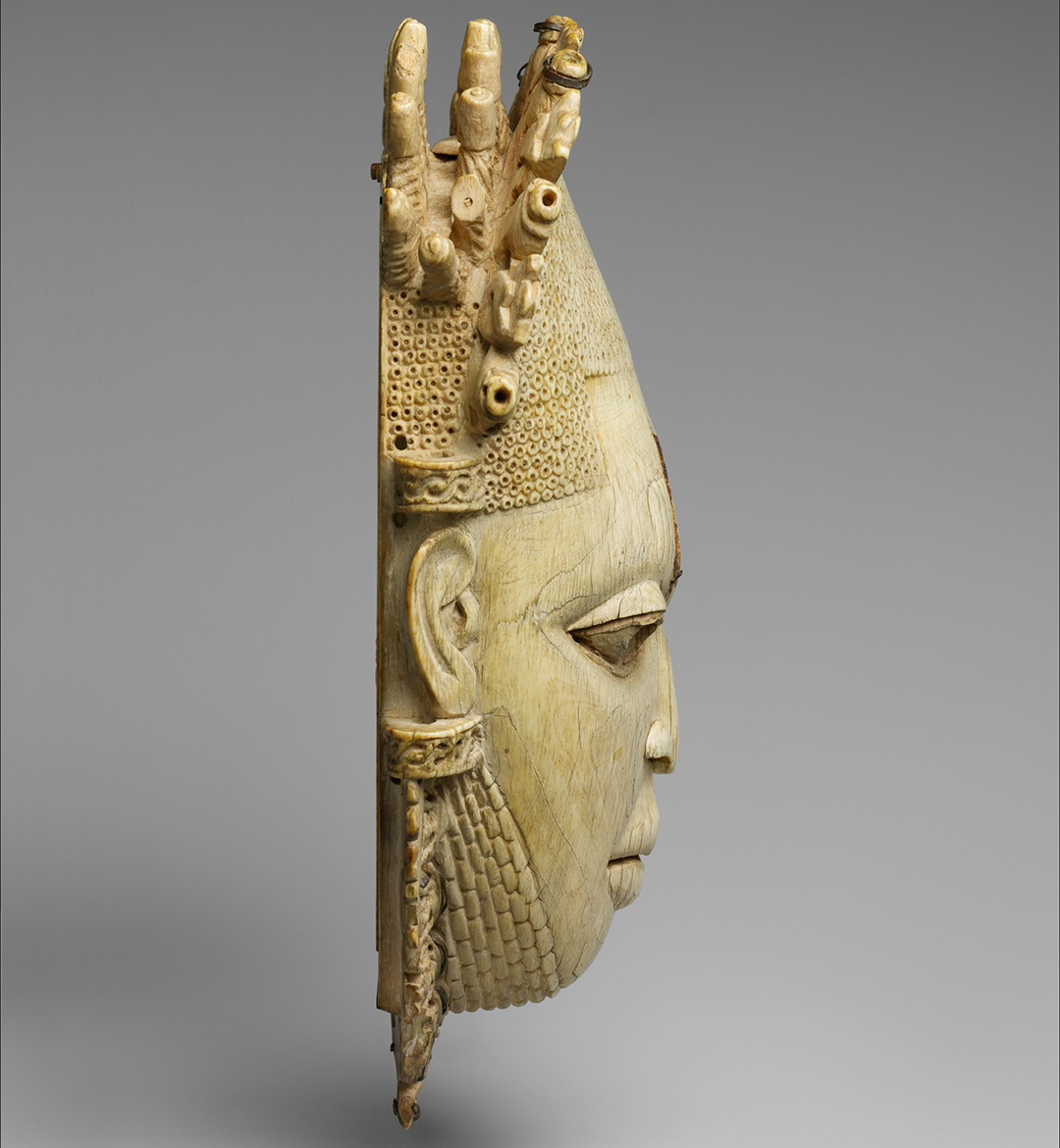
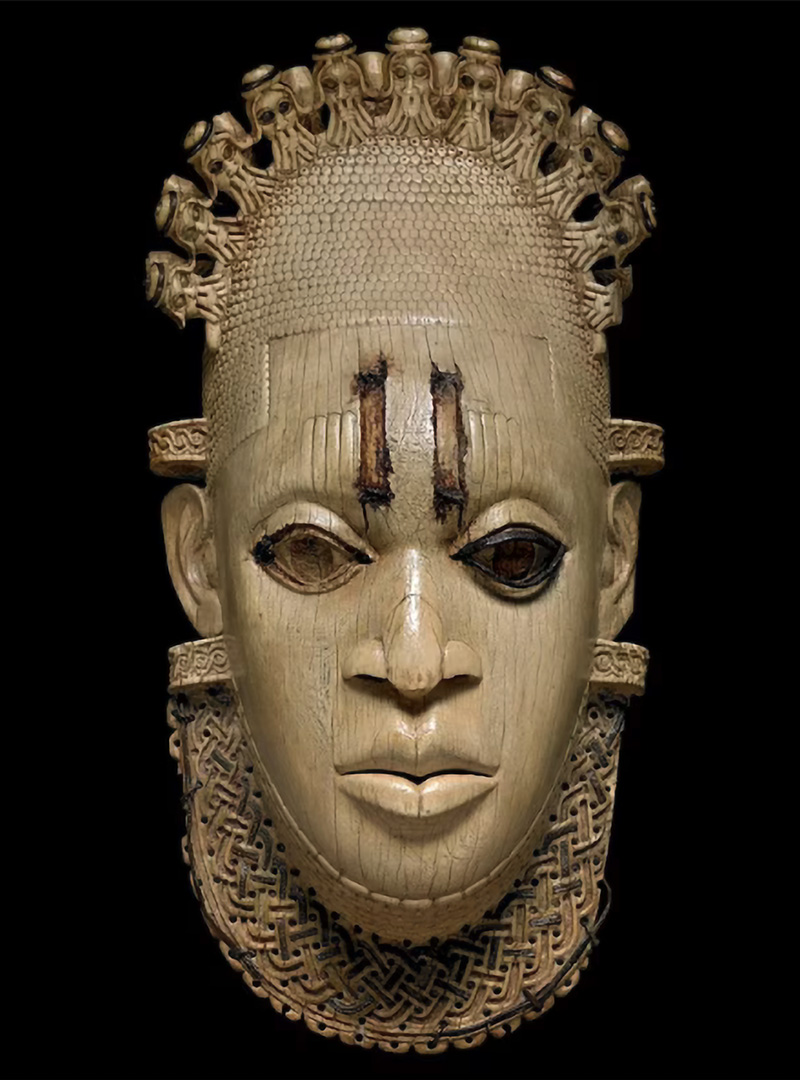
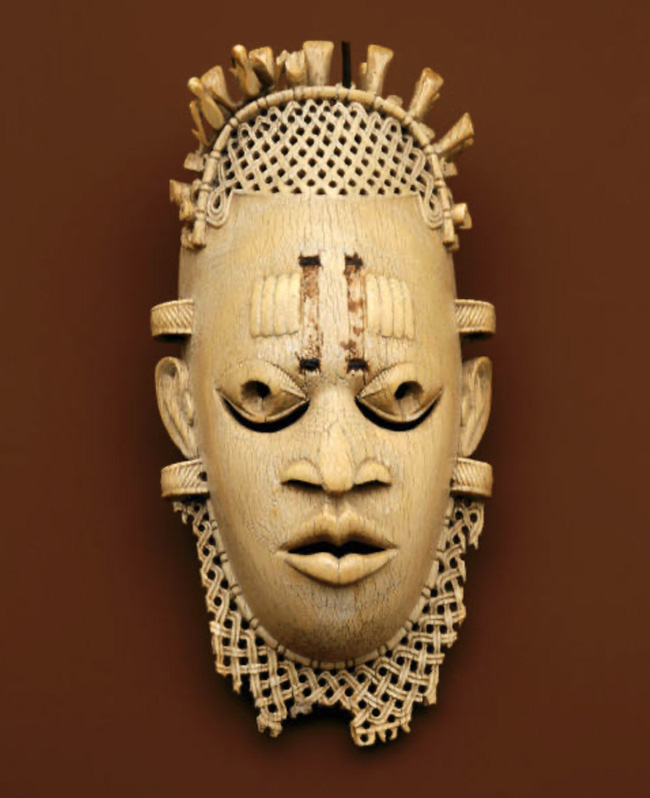
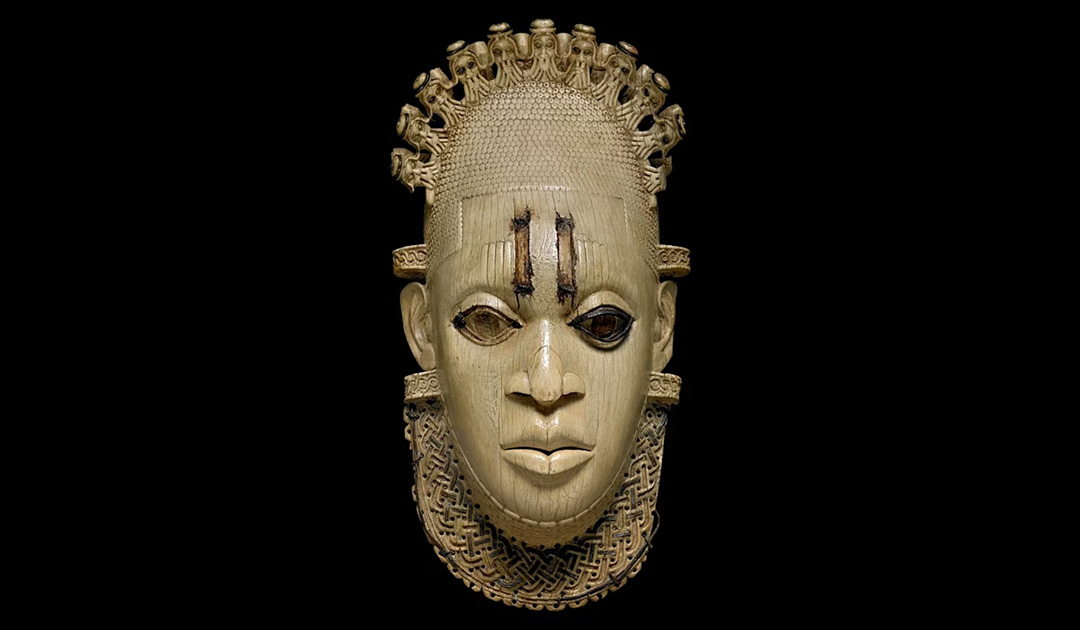
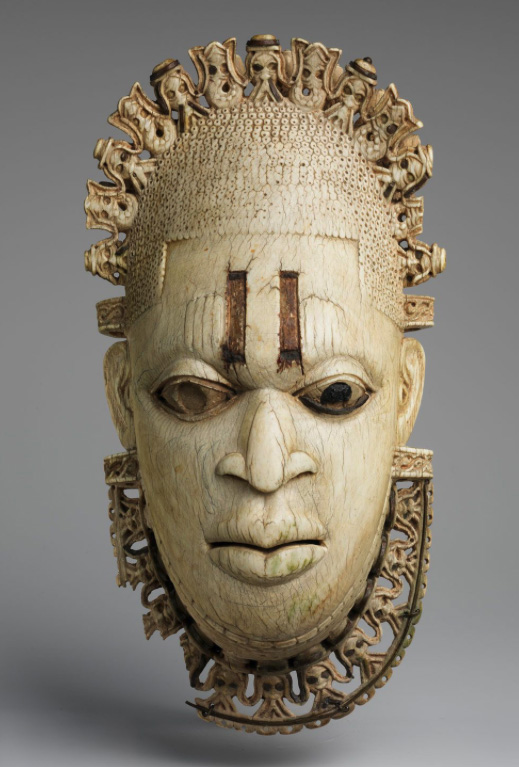
In the early sixteenth century, this design intelligence found one of its most refined expressions in the Kingdom of Benin, in present-day Nigeria. There, artists working within the royal court produced objects that were not exclusively ceremonial but were structurally embedded in governance, spirituality, and political identity. Among the most extraordinary of these works are the ivory pendant masks associated with Queen Idia, the Iyoba, or Queen Mother, a strong strategist whose counsel and political wisdom were instrumental in securing the reign of her son, Oba Esigie, during a period of internal conflict and external threat. Her role was active, decisive, and foundational to the kingdom’s stability.

Elephant plus Festac

The masks made to honour her were not just simple portraits. They were carefully crafted tools of leadership. The Oba wore them during key ceremonies to affirm lineage and clarify authority, linking political power to maternal heritage and family continuity. These objects fit into the court’s complex traditions. They served as spiritual tools, political symbols, and wearable signs of royal legitimacy.

Guild Systems and the Discipline of Continuity

This level of skill did not come from one person’s talent alone. It came from a well-organised design system within the Benin court. Artists who carved royal ivory, especially those in the Igbesanmwan guild, followed strict rules. Their job was not to express themselves, but to turn royal authority into physical form with discipline. Rules about proportions, symbols, and designs kept the style consistent over generations. This system ensured that power was always presented clearly and consistently.

The fact that several Queen Idia masks still exist today shows how strong this system was. The masks are not exact copies, but they share a clear style. There are small differences, but all within set rules. This consistency shows a workshop culture grounded in standards, careful supervision, and the passing down of skills. Even before the term ‘industrial design’ was used, Benin’s guilds understood that authority relies on reliable quality. The form had to be steady enough to be recognised, but still lively enough to have presence. This balance was intentional.

Queen Idia side 02

Material Hierarchy and the Meaning of Ivory

In the Benin court, the choice of materials was always deliberate and meaningful. Ivory, which is bright and rare, stood for purity, prestige, and spiritual power. Its light colour reflected light in a special way, making carvings seem to glow during rituals. Using ivory for royal and ancestral objects imbued the material with a sense of hierarchy. The meaning was part of the substance itself.

This idea is still important in design today. Some materials are chosen for objects meant to last, stand out, or show high status. The choice affects both how things look and how they feel. Materials influence how people see, touch, and value an object. In Benin, ivory was used because it could carry both deep meaning and a strong physical presence. It made authority feel real.

Choosing ivory for the Queen Idia masks made them even more important as symbols of royal legitimacy. The material showed that these were not ordinary items, but objects connected to the heart of the kingdom’s spiritual and political life. With choices like this, design became more than just looks—it became a way to show hierarchy, tradition, and belief.

Design as Mediation Betwixt Worlds

The design skill seen in the Benin court was not limited to its own time. It addressed a problem that still exists: how can form represent larger systems? Objects that last are rarely just neutral things. They help build trust, show identity, and give shape to things people can’t always see. In any society, design helps make authority clear and continuity visible.

What changes over time is not the purpose of design, but the world it works in. As societies become more complex, the hidden systems that shape daily life grow as well. These systems have shifted from spiritual beliefs and royal families to financial networks, digital systems, and global communication. Designers still work where people meet these big, unseen forces. Their job is much the same: to shape materials that connect individuals to what they cannot see.

The Contemporary Interface

Few modern objects show this ongoing design challenge as well as the smartphone. Made to be carried everywhere and used all the time, it has become the main link between people and the complex systems that shape our lives. Through smartphones, people connect to communication, money, social identity, and huge amounts of information beyond what they can see. It is more than just a device—it connects human experience to hidden systems.

These objects matter not just for what they do, but also for how they are designed. They are made to feel easy to use, reliable, and personal. Their materials, shapes, and appearance are carefully chosen to help people build a lasting connection with them. In this way, today’s devices follow the same design thinking as Benin’s court artists long ago. The form helps connect people to systems of power, meaning, and relationships that go beyond what we can see.

Queen Idia side 02

The iPhone as a Contemporary Example

The iPhone stands out as a clear example of this design culture. Its consistent look around the world, careful design, and role as a daily companion for millions show how much design shapes identity and interaction today. Its importance is not just about being new. It continues an old human goal: making objects that hold meaning, build trust, and move between different settings without losing their identity or authority.

Like the Benin court, which used a set visual style to keep power recognisable, today’s design systems rely on consistency to build trust and familiarity, even across great distances. The scale and networks are bigger now, but the main design ideas are the same. Form is not just something to look at. It actively shapes how people experience the world.

Global Circulation and Systems of Value

The travels of these objects show that design can go beyond its first home. Today, Queen Idia masks are in major museums around the world, seen as great works of human creativity rather than oddities. Their movement raises tough questions about history and ownership, but their place in global museums also shows the lasting power of their design. They still draw attention, respect, and authority far from where they were made.

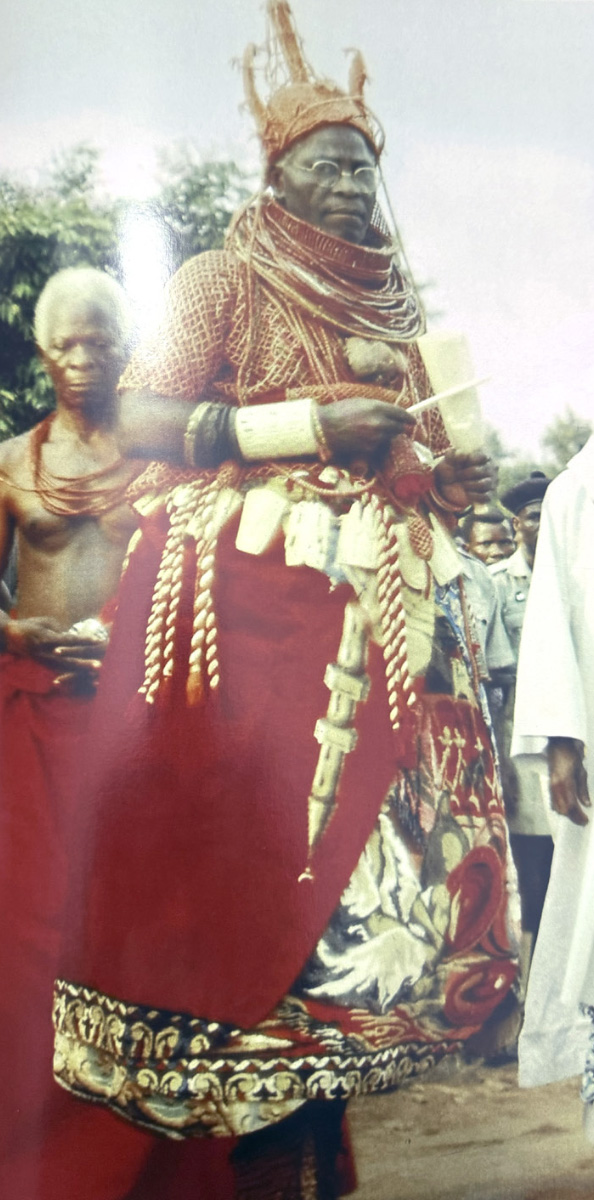
Oba Akenzua II

In another sense, today’s devices circulate through global markets as markers of technology and social status. They work in business systems, not rituals, but both kinds of objects show that design can cross cultures and settings while keeping its power. When form brings together meaning, material, and identity, it can travel and fit into new systems without losing what makes it special.

The Unbroken Logic of Design

Comparing a Queen Idia mask and a modern smartphone is not just about technology. It shows a shared way of thinking. Both come from design traditions that use form to carry hidden meanings. Both show how objects can connect people to bigger systems. They remind us that design is not just about looks or use, but about shaping power, identity, and lasting connections.

Materials have changed. The size and settings have changed. But the main ideas behind design have stayed much the same. For five hundred years, designers have faced the same challenge: making form hold meaning, making material carry memory, and creating objects that can move through time and place without losing their power.

In this way, design is like a language for civilisations. Its rules remain in effect, even when the materials change.


Oriiz is a Griot, Curator, Designer, Culture Architect, and Strategist who makes African history portable and accessible to everyone: those who know, those who question, and those who never thought to ask. He connects 8,000 years of knowledge with the present. Oriiz also edited and served as Executive Producer for The Benin Monarchy: An Anthology of Benin History (The Benin Red Book), Wells Crimson, 2019.

::::::::oriiz@orature.africaIG – @oriizonuwaje

Book Review from The Sun: A nation that never stops making art

Originally featured on The Sun

The Harbinger: A window into the soul of a people: 8,000 Years of Art in Nigeria, reminds readers of a truth often ignored in mainstream narratives, Nigerian art did not begin with colonial contact nor did it pause because of it. Instead, it has continued, quietly, defiantly, intelligently, across centuries.

Oriiz in this work positions Nigerian art not as nostalgia or archaeological curiosity but as living evidence of a people who have always used creativity to understand power, spirituality, identity and survival.

The book reads like a cultural witness statement, connecting ancient traditions to contemporary artistic expressions seen in today’s galleries, studios and global exhibitions.


Read more

Governance and the Engineering of Memory: BRONZE, IVORY AND WOOD

African societies built memory so deliberately that no one could erase it.


By Oriiz U Onuwaje

Oriiz shows us how African societies deliberately built memory right into their surroundings. They used design thinking as a way to survive, weaving authority, lineage and continuity into bronze, ivory and wood. What we now admire as art started out as a practical system. People designed these objects to organise history, legitimise power and preserve identity.

Download PDF version of Essay
 

Most of us think of memory as something fragile, but these societies made it strong. They wove memory into everyday life, into how they governed, practised rituals and organised their communities. By choosing materials like bronze, ivory and wood, they made sure that memory would last, authority would hold steady and continuity would stretch across generations. In their world, art and life went hand in hand, and every object helped keep identity alive and protected, year after year.

MEMORY AS INFRASTRUCTURE:


Memory is not a whisper.
It is a structure.
It carries weight.
Not a tale told once,
but form repeated
until repetition becomes law.
What a people build to remember
outlives the moment of building.
Fired clay outlives breath. Form outlives fear.
Bronze outlives kings. Form outlives power.
Memory is how a society
refuses erasure,
and names that refusal civilisation.

In many African civilisations, power wasn’t just an idea; it was something people could see and touch. Authority needed form, memory needed structure, and identity needed something solid. These needs led to material traditions that served as archives long before modern record-keeping. Through carving, casting, and building, African societies made memory part of the physical world so that history could be seen, touched, and experienced.

Ife Bronzes

NOT DECORATION:


This was not made
to please the eye.
It was made to hold a kingdom.
Power was carved into matter.
Order was cast into metal.
Authority was given a body.
Beauty was discipline.
Discipline made memory endure.
Endurance became history.
Form was never ornament.
Form was governance made visible.

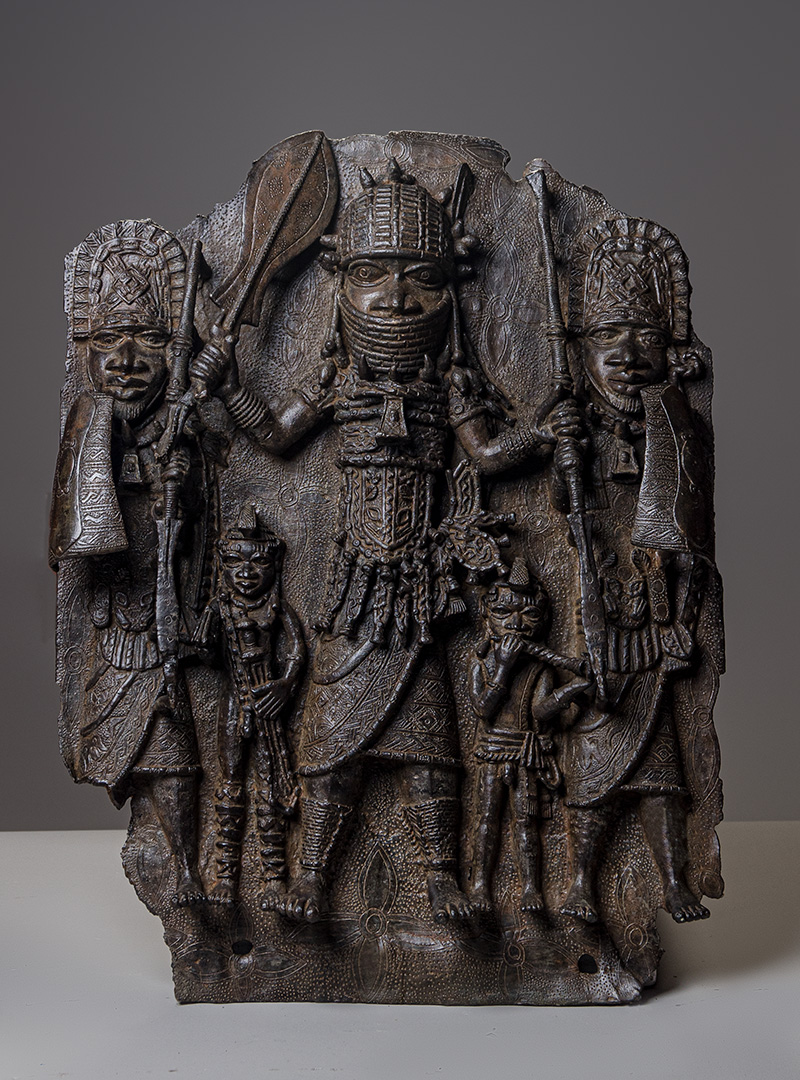
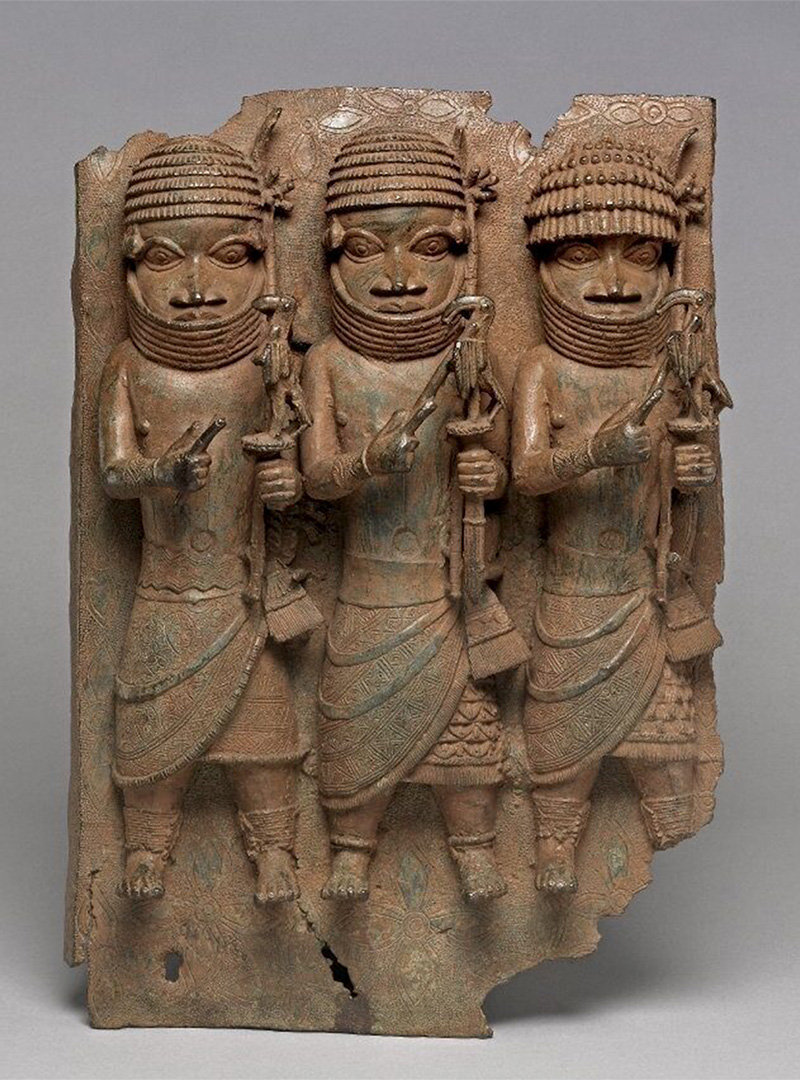
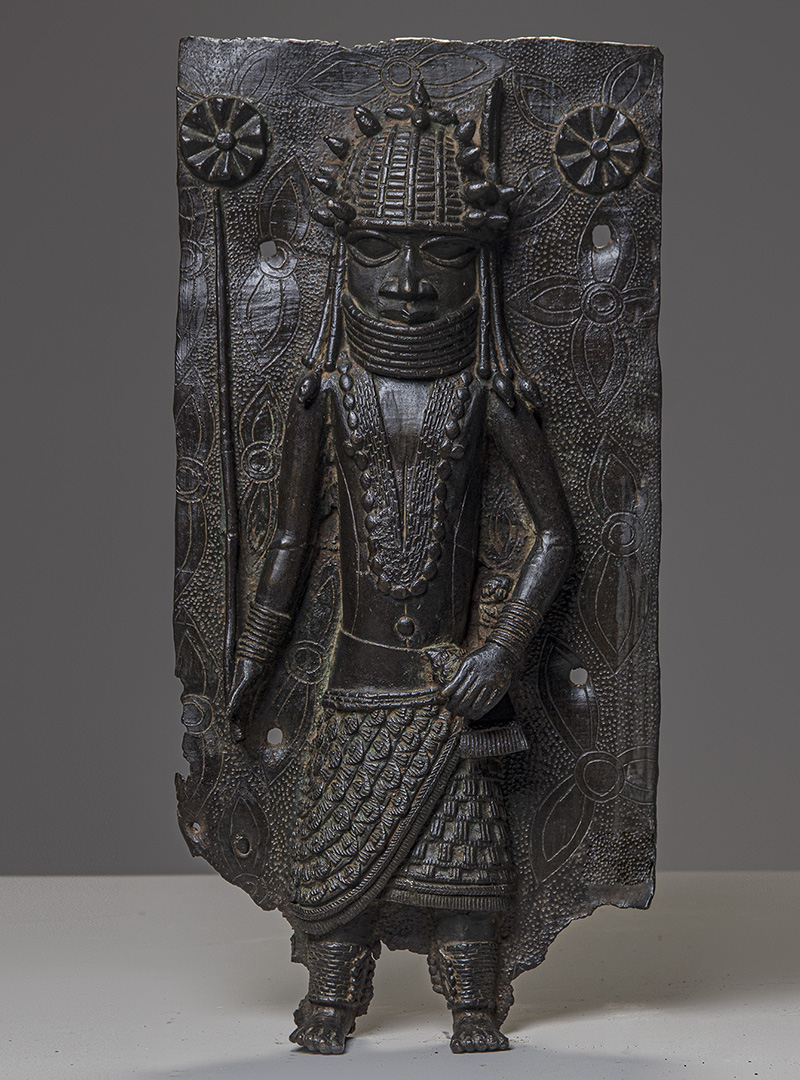
In Benin’s royal courts, bronze demonstrated that beauty was also power. The bronze plaques brought history to life by recording important events directly onto their surfaces. Arranged in sequence, they told the stories of kings, court ranks, diplomacy, military campaigns and rituals, transforming the palace into a visual archive. These works were designed to be read as records as much as admired for their artistry.

Benin Ivory Festac Benin Plaque Benin Plaque

THE FACE OF AUTHORITY:


The face is not a portrait.
It is a philosophy.
It teaches without speaking.
Calm is not softness.
It is controlled power.
Stillness is strength.
When order lives on the surface,
Chaos cannot enter the centre.
Authority begins in form.

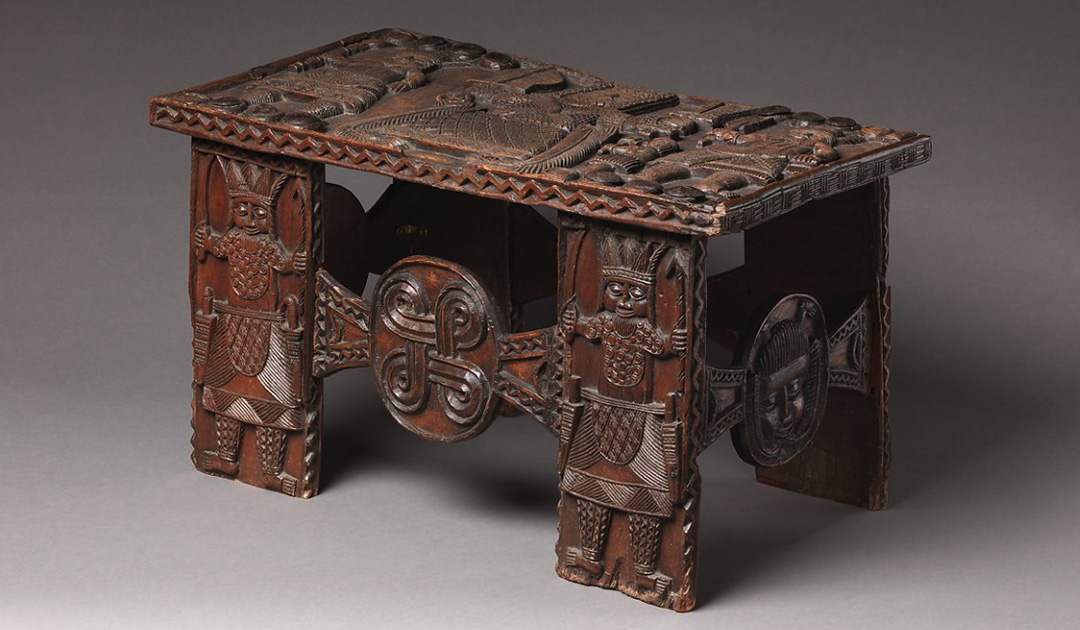
Benin Wooden Stool

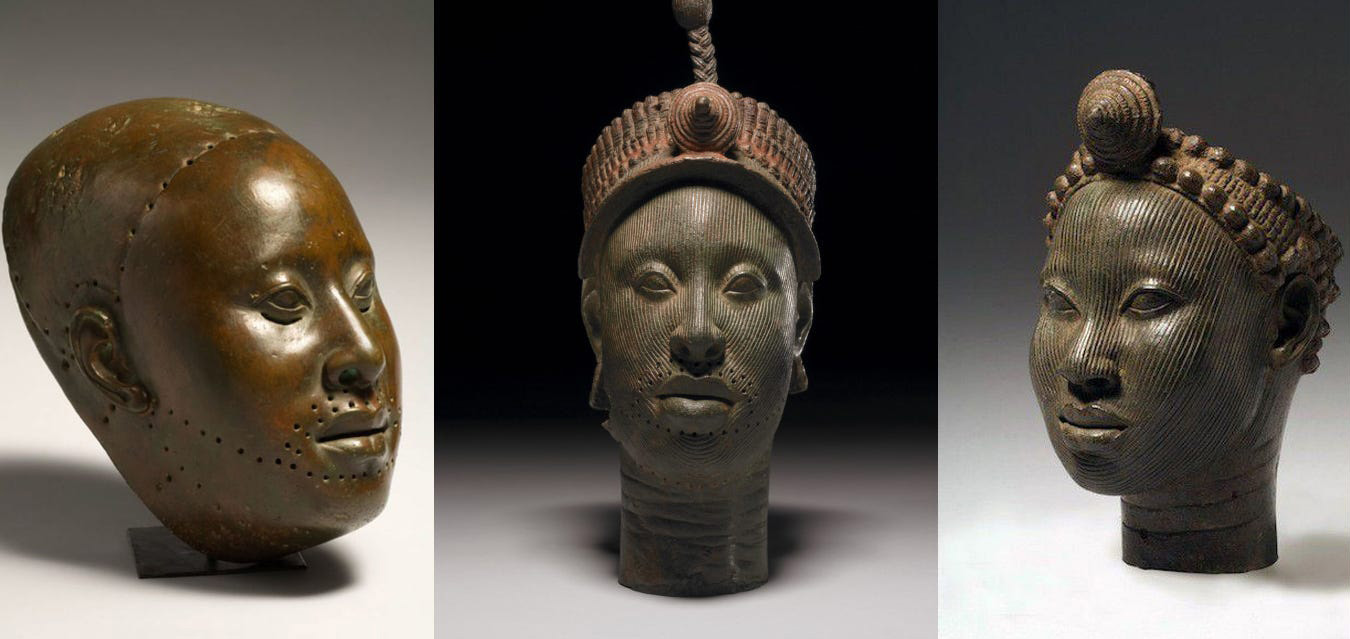
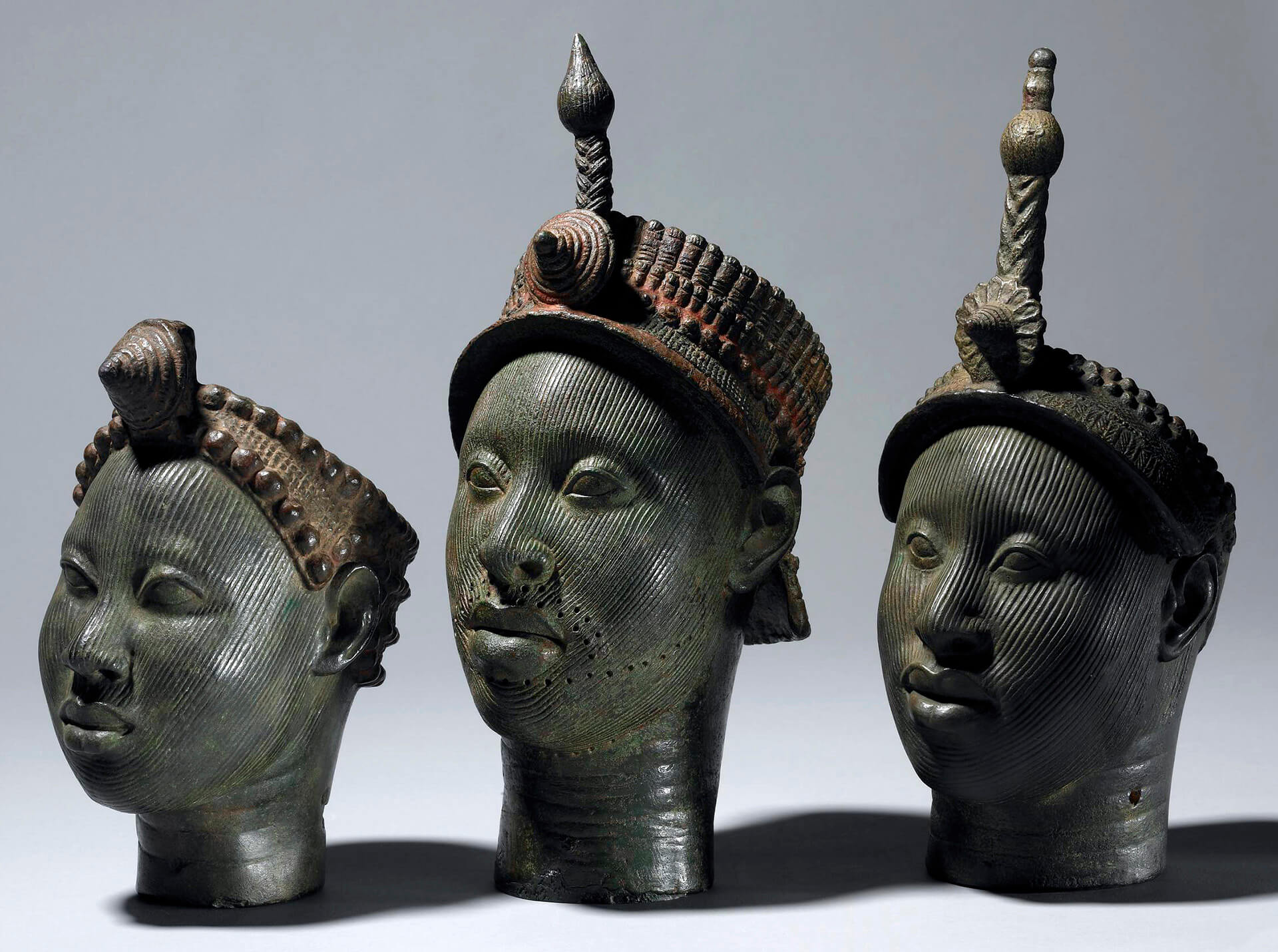
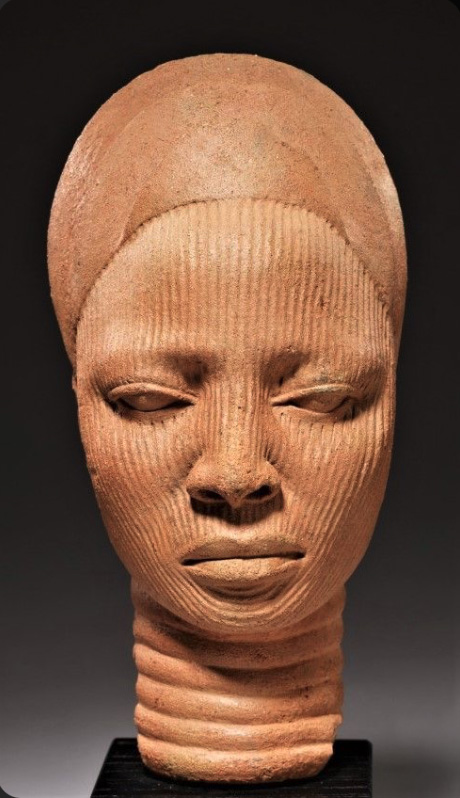
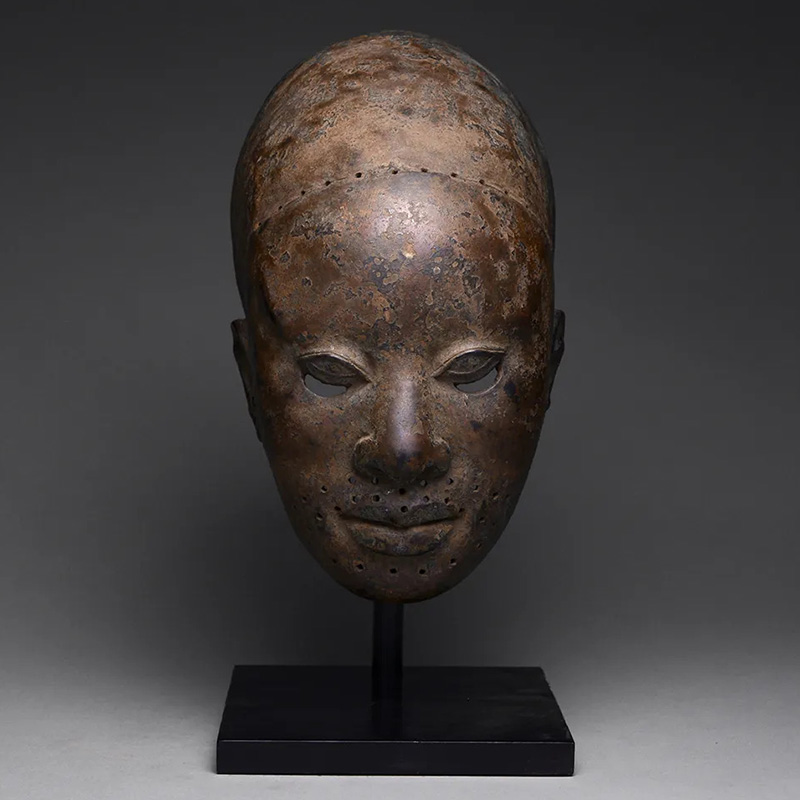
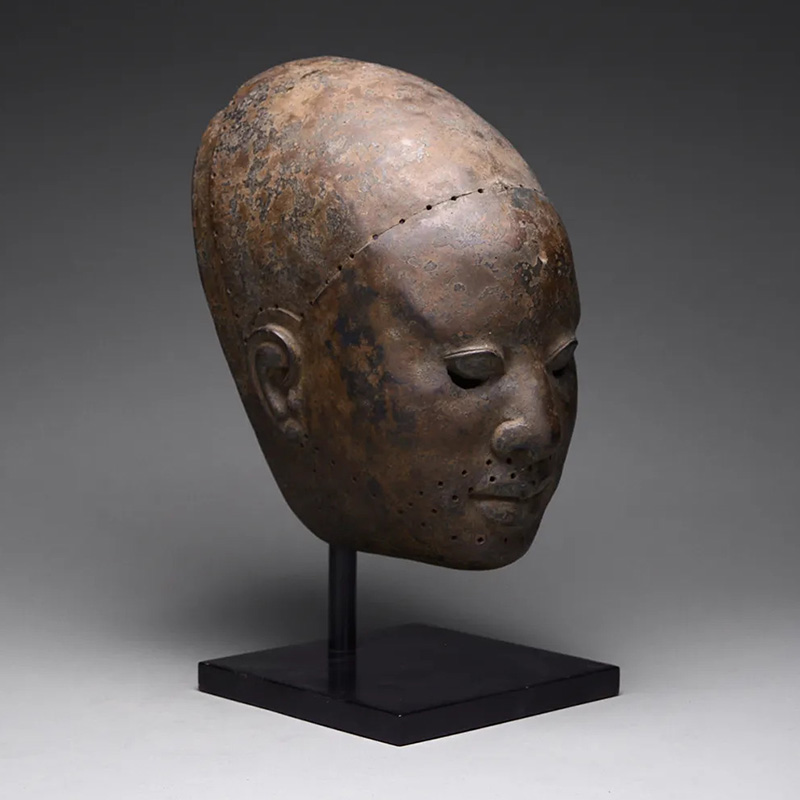
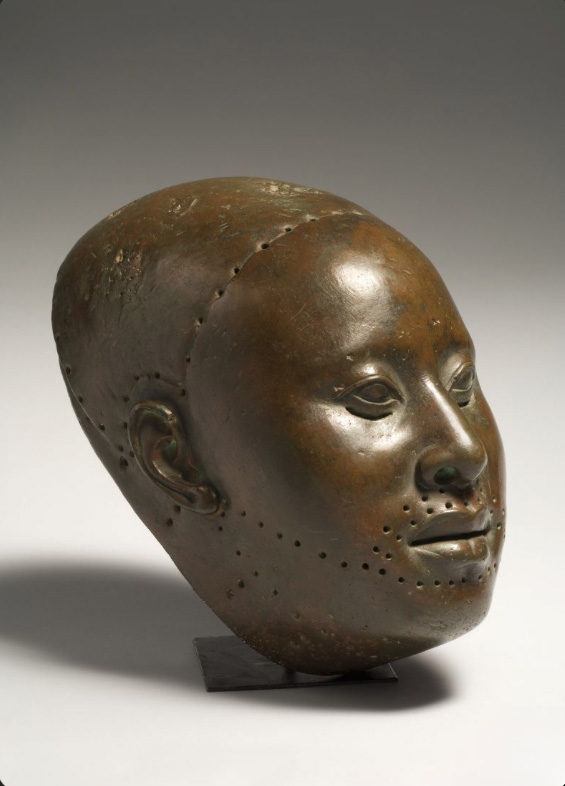
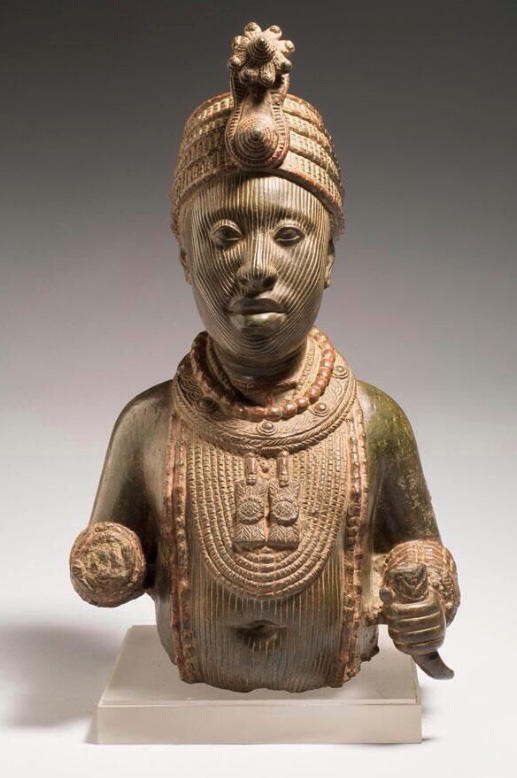
Benin was not the only place with this kind of material knowledge. In Ife, artists produced bronze and terracotta works with remarkable naturalism centuries earlier. The famous Ife heads weren’t merely decorative. They represented sacred kingship and spiritual presence. Their smooth surfaces, balanced forms, and calm expressions embodied ideals of divine rule and moral order. These works gave political authority a visible and lasting form, linking leadership to spiritual beliefs.

Ife Terracotta Female Head Queen Idia Seattle

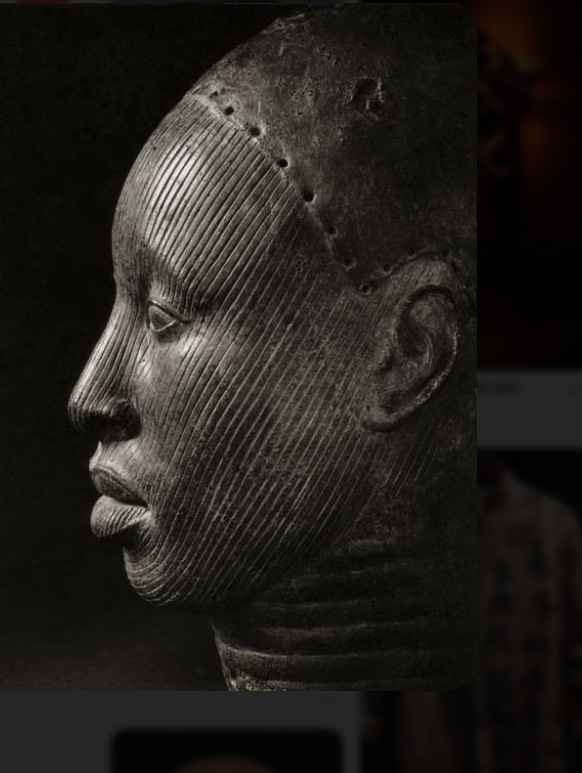
Across West Africa and beyond, artists developed ways to express identity, status, and spiritual meaning through the human form. The parallel lines on Ife bronzes and terracottas, often seen as decoration, actually represent facial marks that indicate lineage, community, and social rank. In sculpture, these lines become a calm, idealised visual code rather than a direct portrait.

This way of treating the surface does more than show a face; it shapes it. The careful lines soften the light, reduce distractions, and make the face look calm, conveying steady, centred authority. Other African traditions use pattern, texture, and surface order to show refinement, ancestral presence, or sacred status. These formal systems turn figures into enduring symbols. Identity, spirituality, and leadership are built into material form.

OBJECTS OF GOVERNMENT:


These were not mere things.
They were instructions.
Guides for living.
How to lead.
How to belong.
How to remember.
Law was shaped before it was written.
Order was held before it was spoken.
A people who build their values
in bronze, wood and ivory
do not surrender them easily.
What is carved into matter
outlives the moods of men.

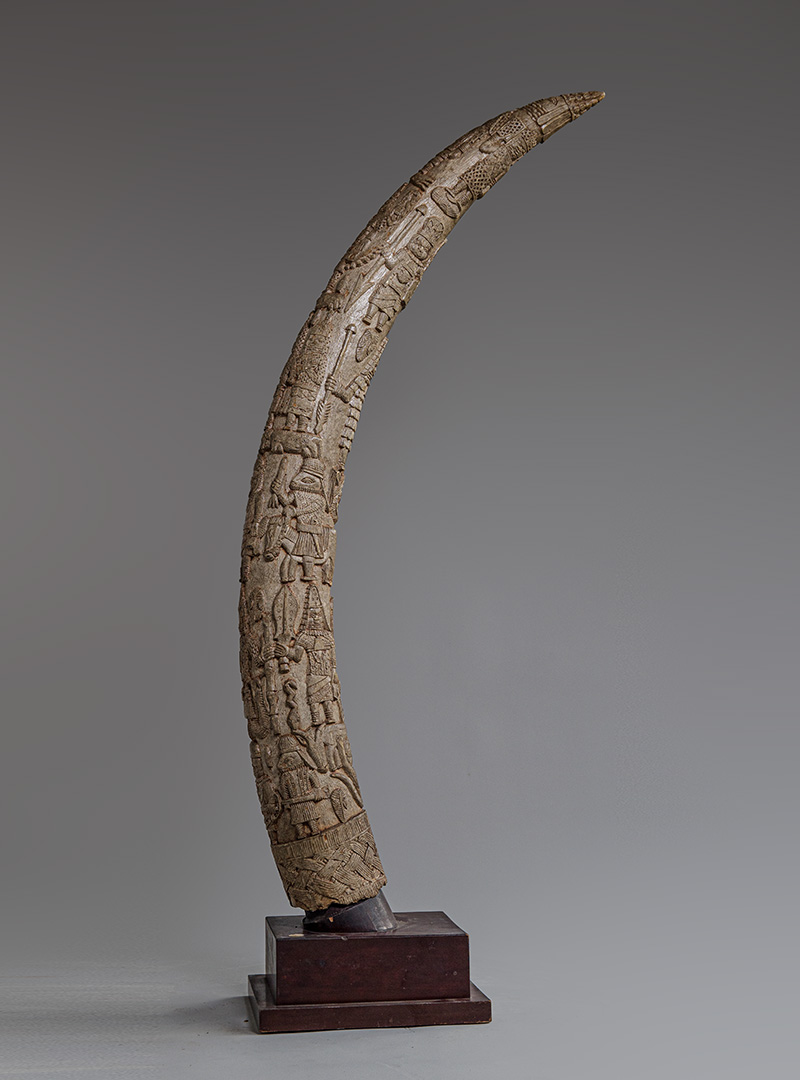
Ivory held similar importance in many African courts. Like bronze in Benin, carved ivory tusks, armlets, and ritual objects were more than signs of wealth. They embodied lineage and sacred authority. Ivory, like bronze, connected the living to their ancestors and linked political order to spiritual life. Its presence in shrines and palaces made memory part of daily life. With ivory, ancestry was always present, and memory was a constant part of experience.

Ivory Tusk Benin

Wood carried the burden of memory throughout Africa. Carved doors, posts, stools, masks, and figures held social knowledge. A carved door could tell a family’s origin story. A stool could represent a chief ’s authority. A mask could embody a community’s moral codes and come to life in ceremonies.

These objects weren’t just separate works of art. They were part of broader systems of education, ritual, and leadership. They were taught through repeated use. They reinforced values through daily use. They made abstract ideas clear and memorable. Their main purpose was to maintain identity, preserve order, and make history difficult to erase.

BEHIND GLASS:


Behind glass, it is called art.
In its home, it was law.
Function turned into display.
A silenced surface.
A separated memory.
A context removed.
The object survived.
The system was broken.
Absence became visible.
Stripped of context,
what remains is admired,
while authority is lost in translation.

There’s a key misunderstanding when memory is separated from the context that gave it meaning. Museums commonly celebrate bronzes, ivories, and carvings for their beauty, but in doing so, they remove these works from the living systems that originally shaped them. To truly understand what these objects mean, we have to look beyond the display case and reconnect them with the lives and communities they once served.

In their original settings, these works were never merely objects to be looked at. Benin plaques adorned palace walls, and commemorative heads anchored ancestral altars. Carved ivories told stories of the universe, and wooden carvings played important roles in rituals and leadership. When placed behind glass and stripped of context, these objects become silent, losing their voices and much of their power.

This change forces us to confront uncomfortable questions. When Europeans looted Benin in 1897, did they take home beautiful sculptures, or dismantle a civilisation’s living archive? The invasion wasn’t simply about stealing objects. It was about breaking a system, tearing away plaques, altars and regalia that held the kingdom’s memory together.

The violence did not end with the loss of the objects themselves. Its effects ran deeper. Objects that once played central roles in governance are now displayed in distant museums behind sterile glass, lifeless. While their beauty and workmanship draw attention, the stories, authority and connections they once embodied remain obscured. What is visible is form, separated from function. Their authority, context and civic function were displaced and severed from the living systems that once made them operative.

ENGINEERED TO LAST:


Memory was designed to survive.
Built with intention.
Shaped for endurance.
Time was not trusted.
Forgetting was anticipated.
Continuity was constructed.
What is shaped with purpose
outlives the age that made it.
That is legacy.
Legacy does not lean on sentiment.
It stands on evidence.

The story of bronze, ivory, and wood is about a philosophy of continuity. Identity endures when it is made real, embedded in daily life, and protected by robust systems. These materials show that lasting memory is deliberately created, not merely a byproduct of culture.

African societies built memory so well that it endures to this day. Their objects still speak, and their symbols still carry meaning. Their systems influence discussions of identity, justice, and belonging. Built memory has weight, shapes spaces, and guides how people act.

Festac

African societies used bronze, ivory and wood with care and purpose to bear this weight. By selecting these materials, they built a culture to last, rooted authority in history, and transformed memory into a powerful force that shaped human life.

Continuity is Designed

Bronze, ivory and wood leave us a heritage that extends beyond museum displays or technical mastery. These materials teach us how societies endure. African civilisations recognised that memory fades quickly if left to chance, but it endures for generations when communities embed it in structures. They refused to separate beauty from leadership or spiritual life from politics. Instead, they combined all these elements so identity would continue through tangible things.

2 Ife bronze head 13th century ce 15th century ce Idia Obalufon

Today, most of those systems have been broken apart, yet even as fragments they still speak. They show us that culture is not sustained by feelings alone but by purposeful design. Authority must have a basis. Lineage must be visible. Memory must take a physical form if it is to withstand the pressures of change.

We live in an age when information grows rapidly, yet meaning can slip away. These traditions offer another perspective. They tell us that continuity is never accidental. It is shaped by repetition, ritual and form, and it survives where memory is shared, practised and anchored in lasting structures.

African societies chose bronze, ivory and wood not only for their toughness and beauty, but also for their ability to carry meaning across generations. By working with these materials, they did more than create objects; they built ways to remember, belong and govern.

Ife Bronze Ooni

This, ultimately, is the deeper inheritance. It is not only about the objects themselves but also the wisdom that shaped them. The lesson is clear: for a society to survive, it must design continuity with care, and to do so, it must give memory a form that time cannot easily erase.


Oriiz is a Griot, Curator, Designer, Culture Architect, and Strategist who makes African history portable and accessible to everyone: those who know, those who question, and those who never thought to ask. He connects 8,000 years of knowledge with the present.

oriiz@orature.africa IG – @oriizonuwaje